


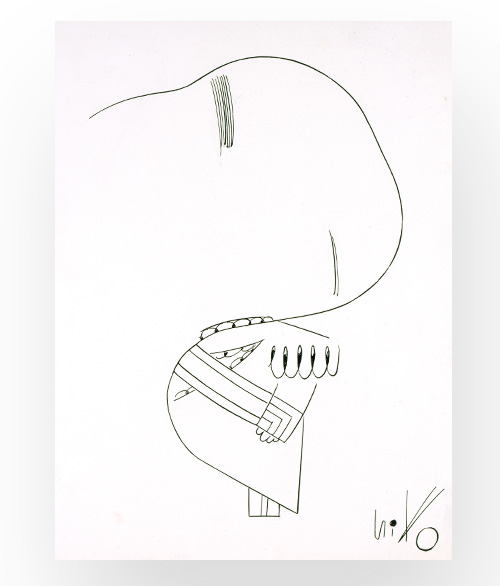
Nicolás Martínez Lage, NIKO. Francisco Franco, 1950-1981. Marker pen on card, 31.5 x 23.4 cm. MORERA Collection. Museum of Modern and Contemporary Art of Lleida, 1053<br/>Donated by the Andrea Martínez Family, 1993
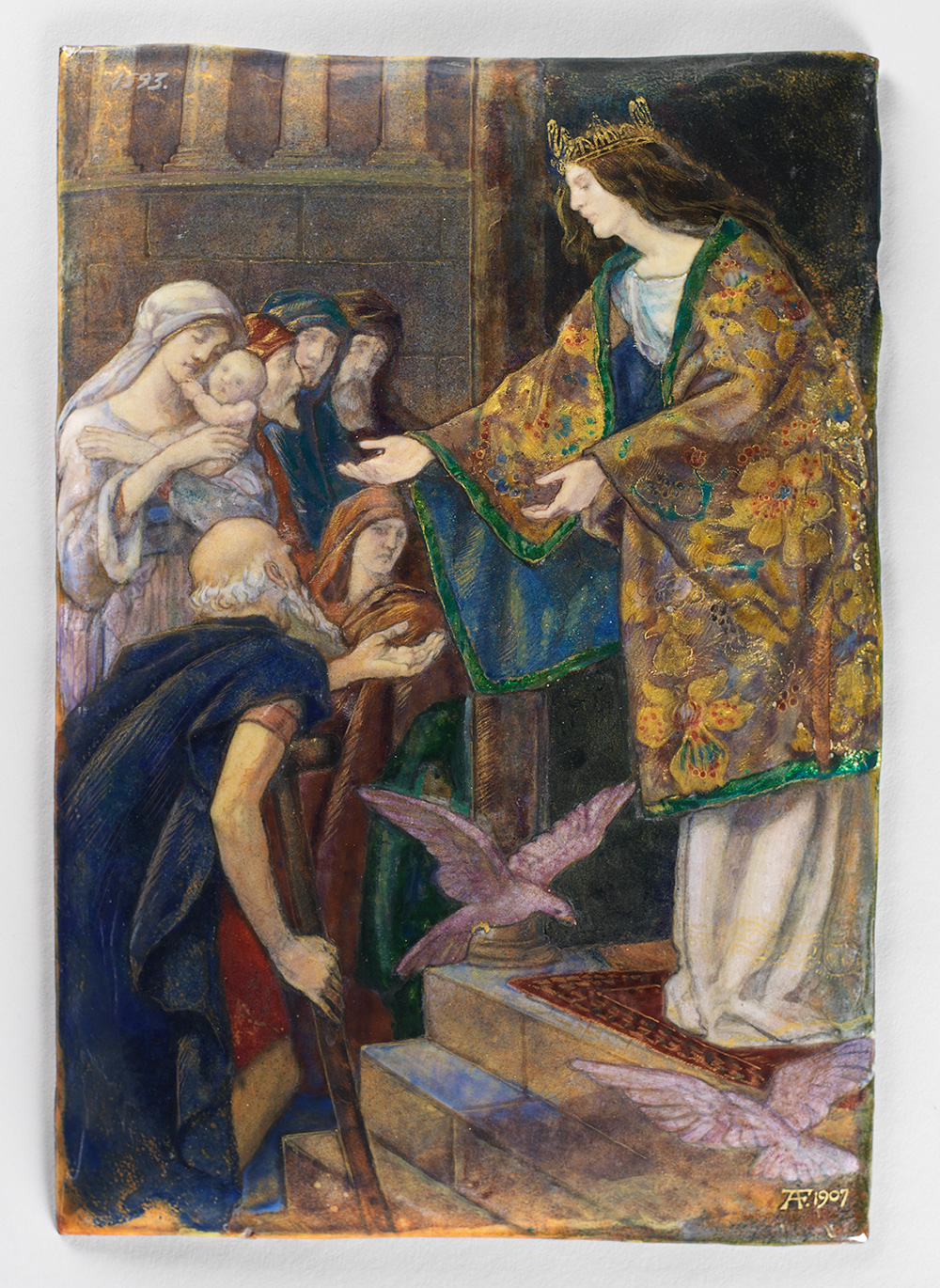
Alexander Fisher, <em>La Caritat (Charity)</em>, 1907, enamel on metal. MADB 1593<br/>Museu del Disseny-DHub
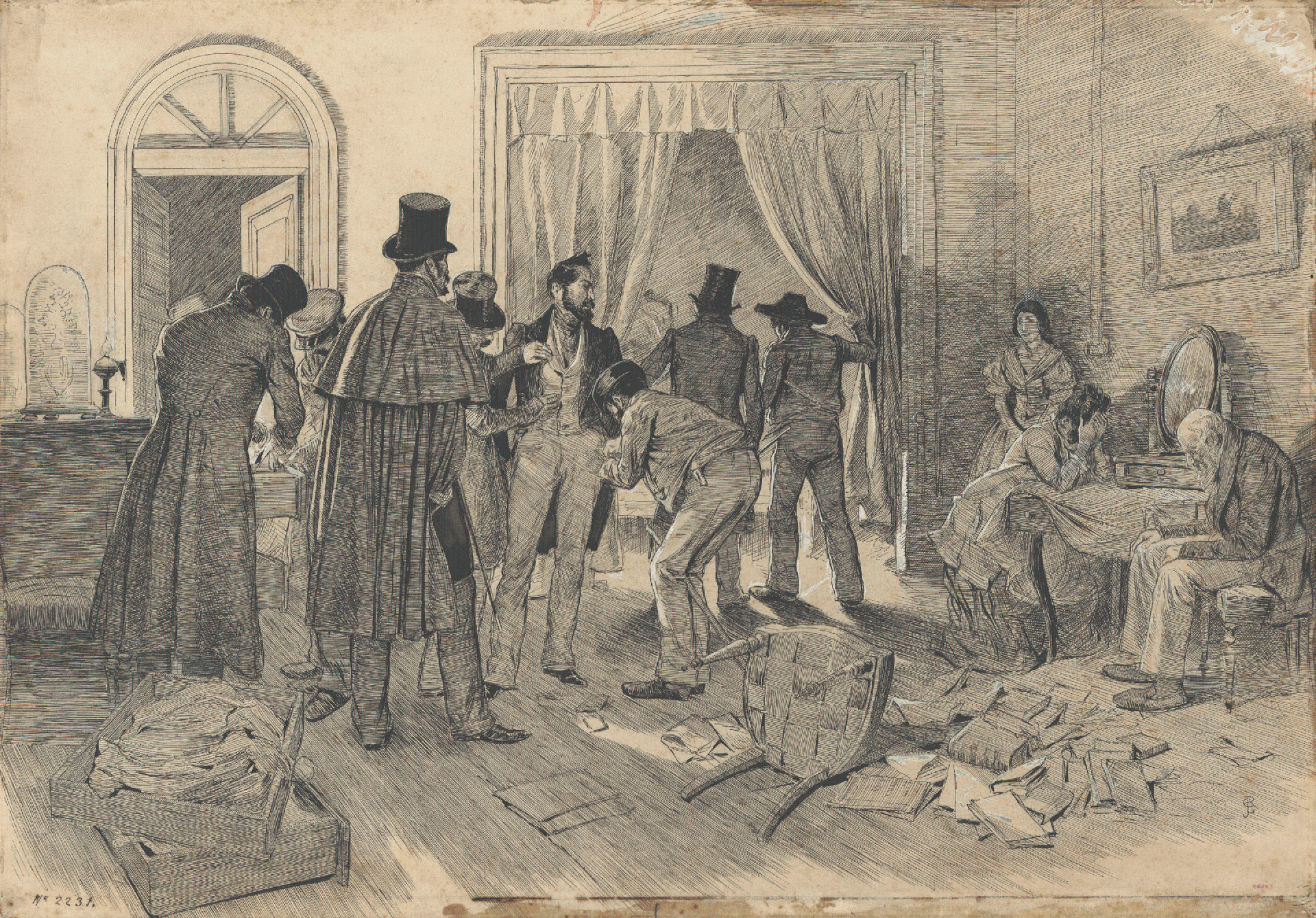
Josep Lluís Pellicer, <em>Police search,</em> 1886. National Museum of Art of Catalonia, Acquisition of the Casellas collection, 1911, Public domain
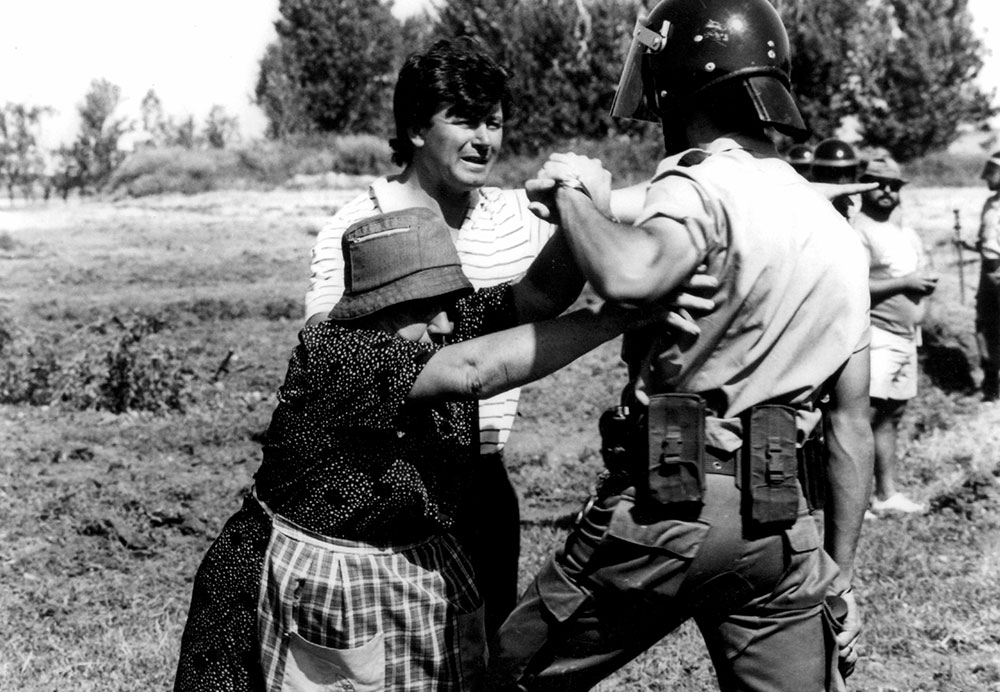
Esther Remacha. <em>Women Freedom Fighters 3,</em> 1976-1977. Black-and-white photograph, 30 x 40 cm. MORERA Collection. Museum of Modern and Contemporary Art of Lleida, 5022<br/>Generalitat de Catalunya Collection. National Collection of Photography, 2022

Joan Miró. <em>L’esperança del condemnat a mort I</em>, 9 de febrer de 1974, acrílic damunt tela. © Fundació Joan Miró, Barcelona
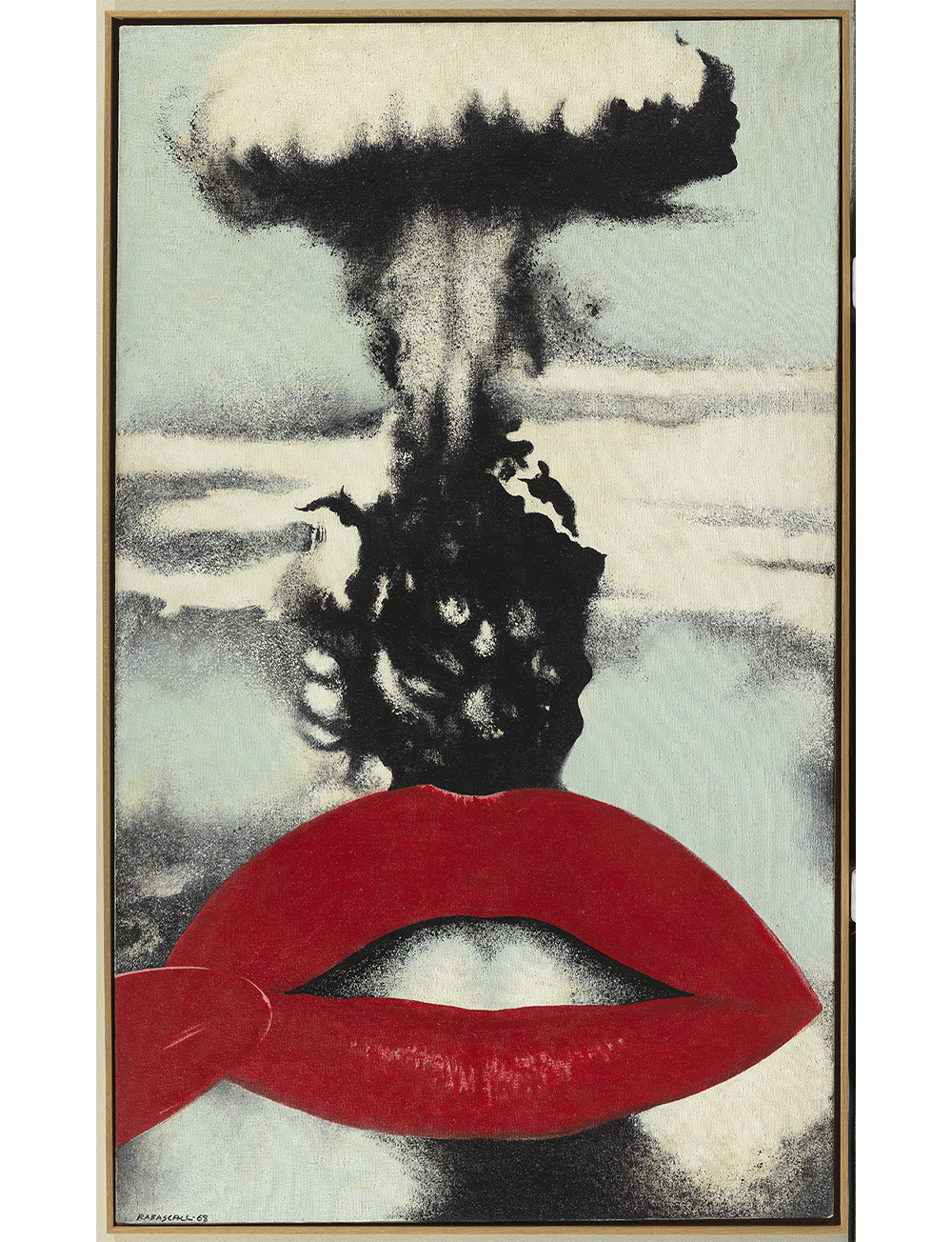
Rabascall, Joan. <em>Atomic </em>Kiss, 1968. Acrylic on canvas. 162 x 97 cm<br/>MACBA Collection. Barcelona City Council Collection. © Joan Rabascall, VEGAP, Barcelona<br/>

Joan Ferrer Miró, <em>Public exhibition of a painting,</em> circa 1888. National Museum of Art of Catalonia, Contribution from the Barcelona Provincial Council, 1906, Public domain

J. Pons, <em>Lina Ódena</em>, 1937. National Museum of Art of Catalonia, From the “International Exhibition”, Paris, 1937, © The author or their heirs
MUSEUMS: POWER AND DISSENT
Joan Maria Minguet
Retired professor from the Department of Art and Musicology at the Autonomous University of Barcelona. Art critic and exhibition curator.
Images don’t speak for themselves. By drawing an interesting interpretation of “Schrödinger’s Cat” paradox by the famous physicist, we could say works of art do not exist until someone observes them. And asks questions about them. If there are no questions, and we accept that this image has the autonomous power to explain itself, we turn the observer into a mere hostage. And art into cosmetics.
Images don’t speak for themselves; they respond to the questions we ask them at every moment and in every context. Under the guise of neutrality, museums are an institutional context which politically level all messages, all interpretations, both successive and contemporary, that images can offer. In museums, time stops and becomes controlled by the institution. Even if, sometimes, the institution doesn’t aim to do so.
This project proposes certain readings based on the hypothesis that it is impossible for a museum to be neutral. We aim to highlight a series of works coming from the Xarxa de Museus d’Art de Catalunya that call for the observer to choose an interpretation: between power and dissent, and between exercising power and the art that has been critical of it. It’s time for the observer to take the lid off the box and decide whether Schrödinger’s cat is alive or dead.
EXERCISING POWER. THOSE WHO RULE AND THOSE WHO HAVE RULED
Museum halls are littered with traces of those who have ruled. As well as of those who rule. These are located in the halls or, if the leaders have fallen into disgrace, in the vaults. In reality, some images are confusing. What are these works doing there? Some of the purposes for which they were created, whether for or against power, may have faded over time. The representation of power has traditionally been submissive, but the images depend on the observer’s gaze.
The vaults of Catalan museums, for example, contain coins, busts and portraits of the dictator Franco. Certain ideologies may seek to reclaim these images to assert the fascism they represent. Looking back even further, we find even more rulers. We keep finding even more rulers, from here or elsewhere, whether real or imaginary. What can we do with so much feverish power, with what they represent, with the artists who made these designs, with us, who look at them?
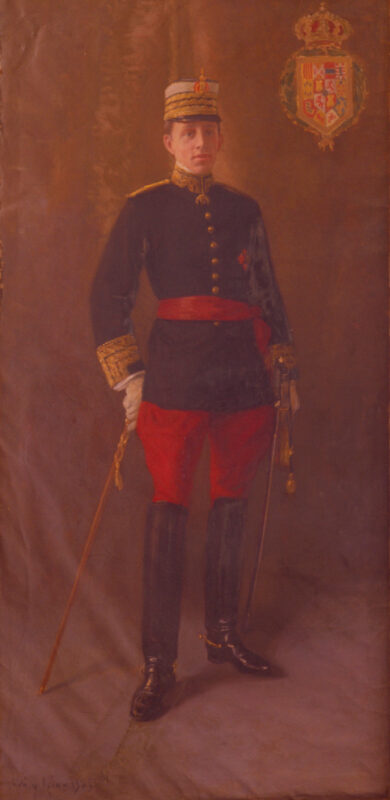
Baldomer Gili Roig. Alfonso XIII, 1905. Oil on canvas, 220 x 110 cm.
MORERA Collection. Museum of Modern and Contemporary Art of Lleida, 0334
Donated by the Lleida Provincial Council, 1917

Jordi Jové. The horse is a good friend, 1987. Metallic paint, acrylic and primer on paper, 60 x 39 cm. MORERA Collection. Museum of Modern and Contemporary Art of Lleida, 0954. Loaned by Lleida City Council, 1987

Ignasi Prat. The World of the Victors (Pazo de Meirás, Sada), 2014. Digital colour photograph, 78 x 110 cm. MORERA Collection. Museum of Modern and Contemporary Art of Lleida, 5009. Generalitat de Catalunya Collection. National Collection of Photography, 2022
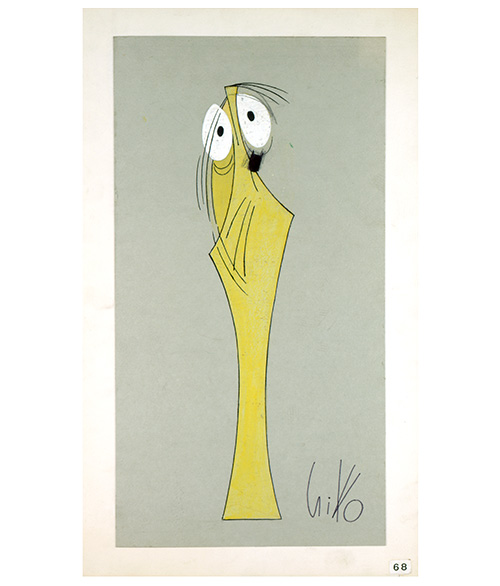
Nicolás Martínez Lage, NIKO. Adolf Hitler, 1950-1981. RMarker pen and primer on card, 56.2 x 49.5 cm. Col·lecció MORERA. Museu d’Art Modern i Contemporani de Lleida, 1041. Donated by the Andrea Martínez Family, 1993
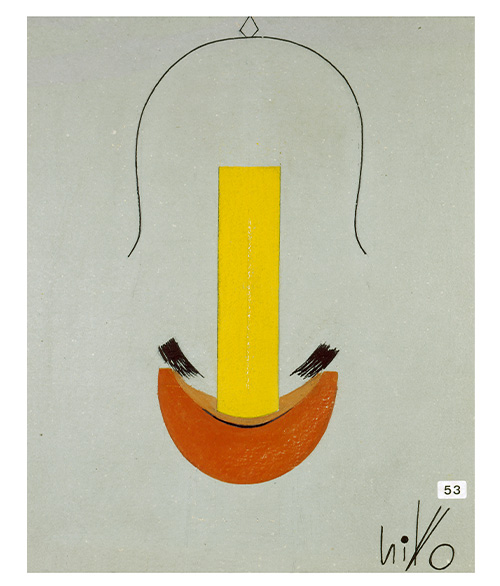
Nicolás Martínez Lage, NIKO. Alfonso XIII, 1950-1981. Marker pen and primer on card, 56.2 x 49.5 cm. Col·lecció MORERA. Museu d’Art Modern i Contemporani de Lleida, 1026. Donació de la Família Martínez Andrea, 1993
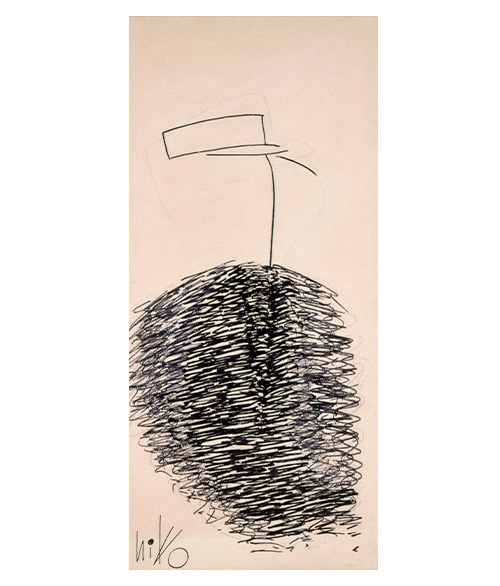
Nicolás Martínez Lage, NIKO. Fidel Castro, 1950-1981. Pencil and marker pen on card, 67.2 x 40.2 cm. Col·lecció MORERA. Museu d’Art Modern i Contemporani de Lleida, 1026. Donació de la Família Martínez Andrea, 1993
Nicolás Martínez Lage, NIKO. Francisco Franco, 1950-1981. Marker pen on card, 31.5 x 23.4 cm. Col·lecció MORERA. Museu d’Art Modern i Contemporani de Lleida, 1026. Donació de la Família Martínez Andrea, 1993
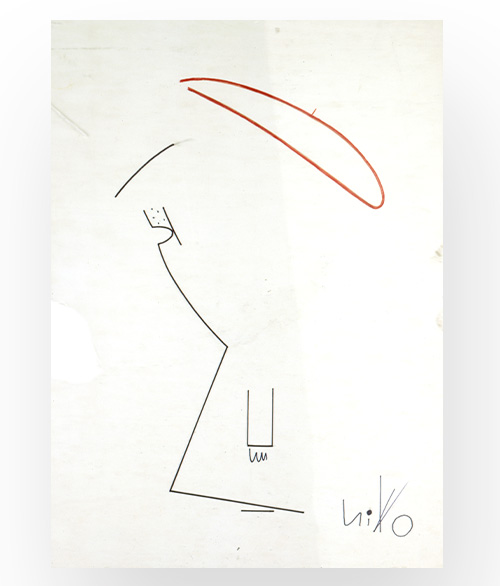
Nicolás Martínez Lage, NIKO. Francisco Franco, 1950-1981. Marker pen on card, 31.5 x 23.4 cm. Col·lecció MORERA. Museu d’Art Modern i Contemporani de Lleida, 1026. Donació de la Família Martínez Andrea, 1993
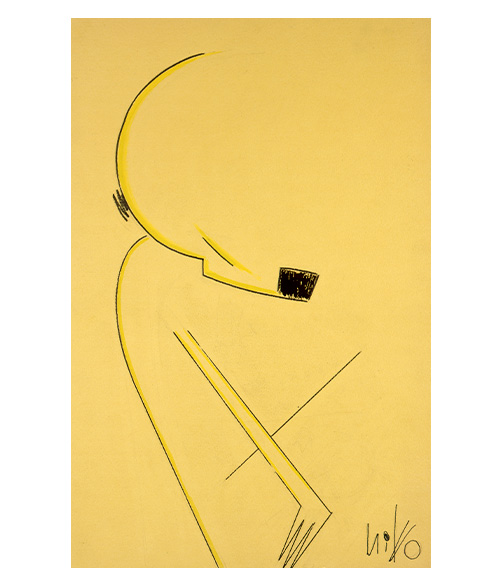
Nicolás Martínez Lage, NIKO. Lenin, 1950-1981. Marker pen on card, 65,6 x 49,6 cm. Col·lecció MORERA. Museu d’Art Modern i Contemporani de Lleida, 1026. Donació de la Família Martínez Andrea, 1993
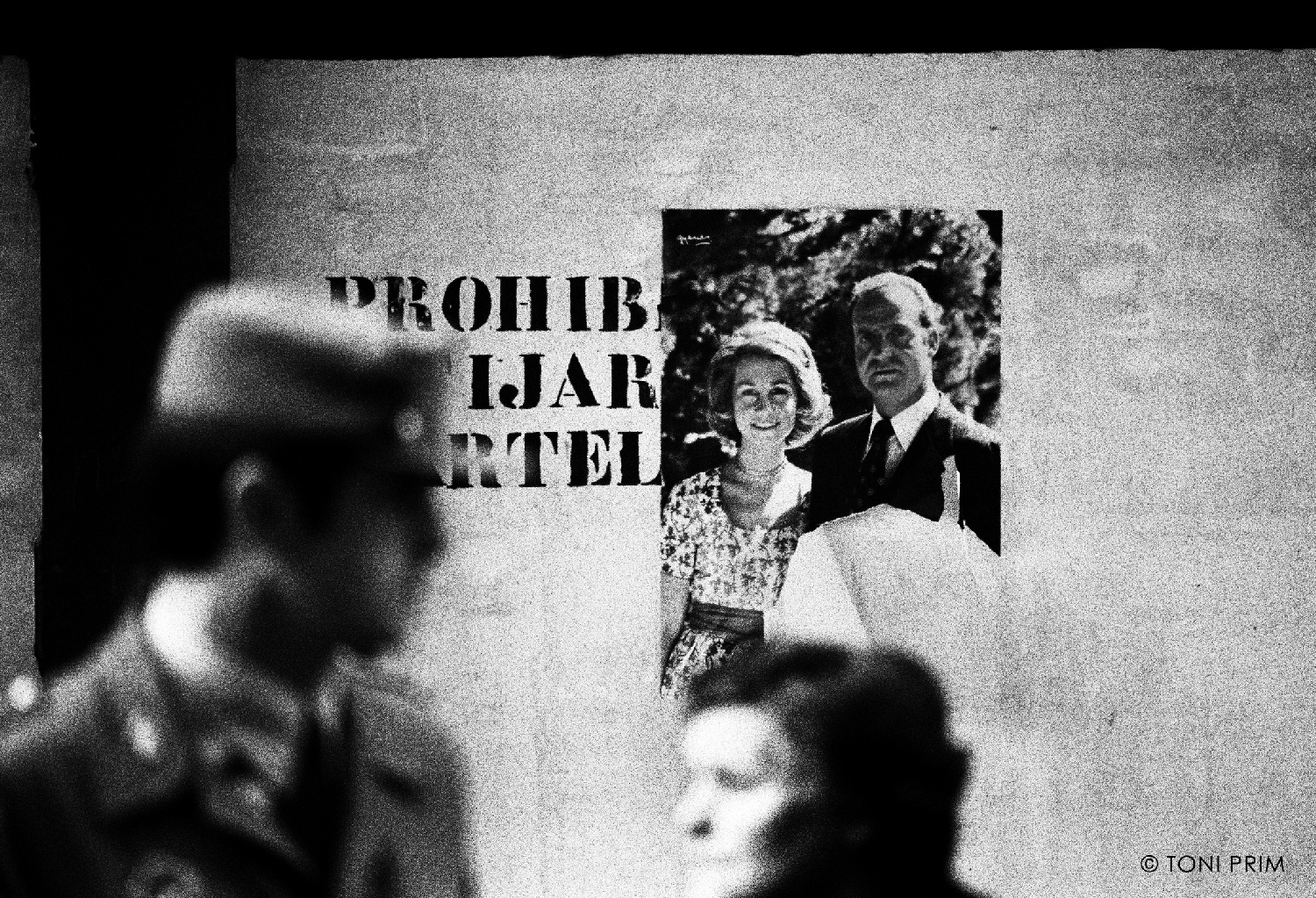
Toni Prim. No posters. Lleida, , 1976. Black-and-white photograph. Modern copy of the original negative, 18 x 28 cm. MORERA Collection. Museum of Modern and Contemporary Art of Lleida, 4842. Generalitat de Catalunya Collection. National Collection of Photography, 2020
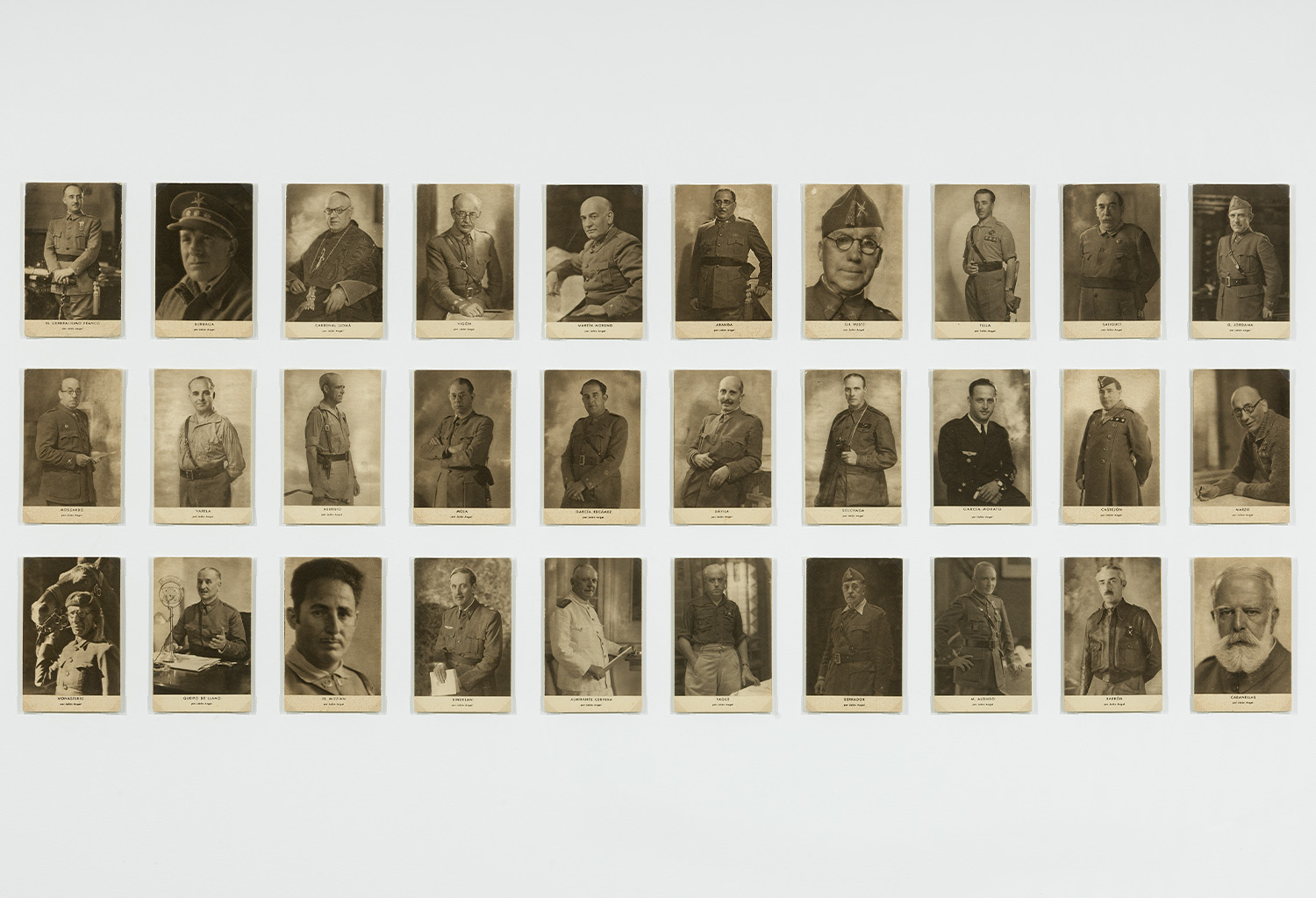
Vilanova, Oriol. Empire Builders, 2009. Photographs by Jalón Ángel, circa 1939. Lithograph on paper. 30 postcards: 14.3 x 9 cm each. MACBA Collection. MACBA Consortium. © Oriol Vilanova 1939. Litografia sobre paper 30 postals: 14.3 x 9 cm c/u. Col·lecció MACBA. Consorci MACBA © Oriol Vilanova
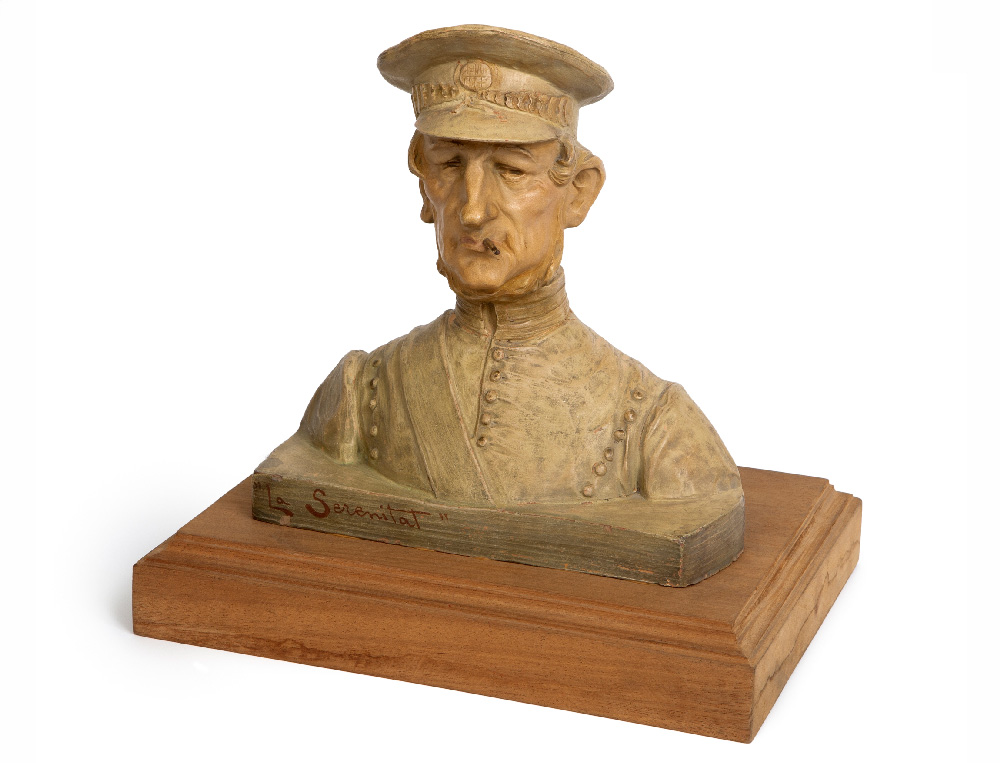
Serenity, Lambert Escaler, 1874 – 1957, polychrome terracotta, Reg. 4223, Abelló Museum Mollet del Vallès 4223. Museu Abelló . Mollet del Vallès
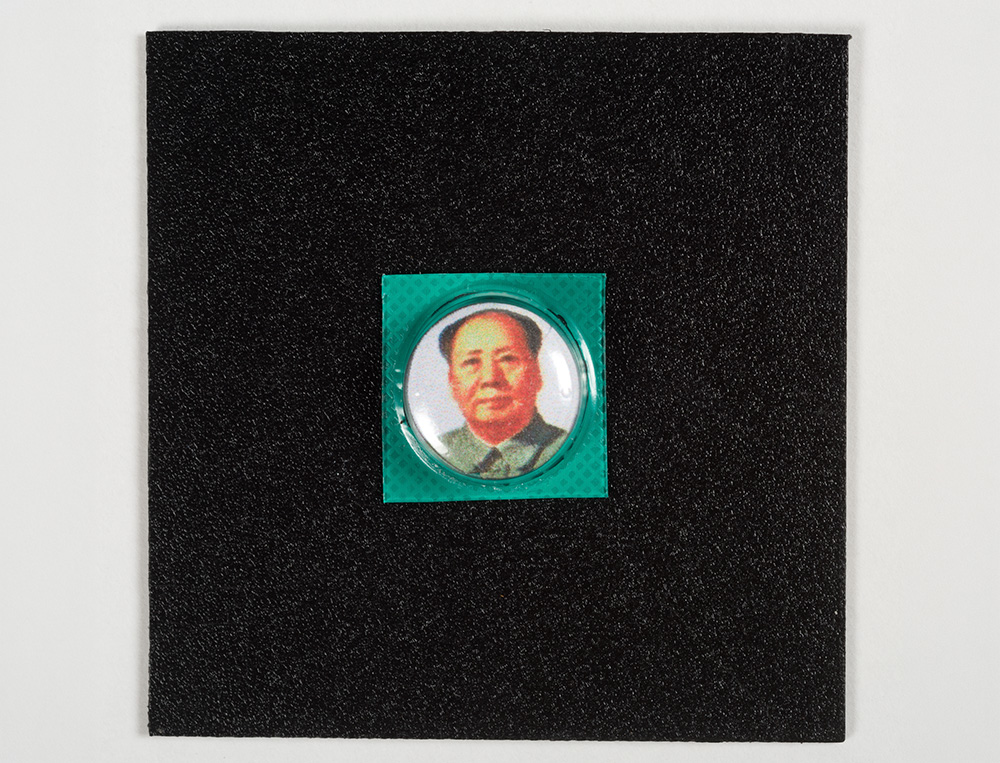
Primitivo Martín. Mao Aspirin, 1979. Photograph taken inside a plastic aspirin pack, 1.8 x 1.8 cm. MORERA Collection. Museum of Modern and Contemporary Art of Lleida, 4438
Donated by Lucía Martín Carrero, 2019
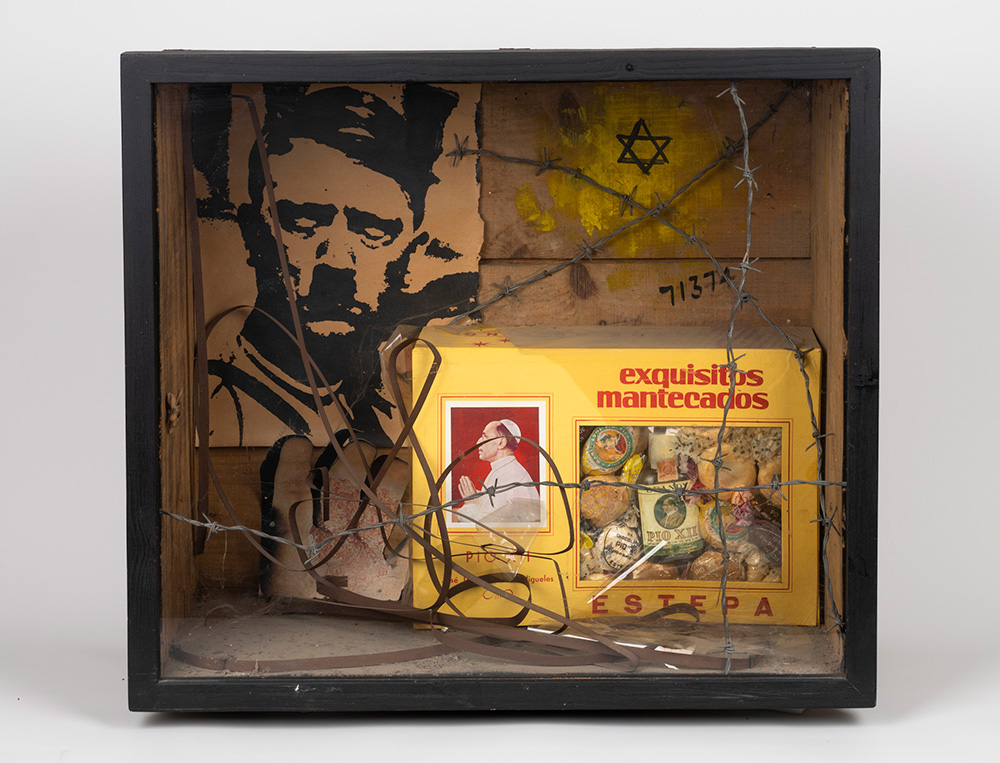
Evarist Vallès. Nadal 71734 (Christmas 71734), 1965. Mixed media. ME 1609
Museu de l’Empordà
EXERCISING POWER. POWER AND CHARITY
The highest expression of power is wealth, in other words economic, ostentation. It is in luxury, in inequality, where power takes shape. For example, in the decoration of palaces and churches. Apart from that, economic excess is not easy to find in art history, especially in the contemporary era.
In contrast, there are many images that represent the other side of wealth: poverty, fulfilling Samuel Beckett’s phrase “To him who has nothing it is forbidden not to relish filth”. Another thematic expression of wealth is charity. Charity can only be understood based on societal inequality: those who have sloughed off some of their excess.
Art has often resorted to poverty (and to charity), but rarely have the poor been the ones to represent themselves.
Josep Sancho Piqué. Christian charity, 1898, oil on canvas. MAMT NIG 163 Museu d’Art Modern de Tarragona
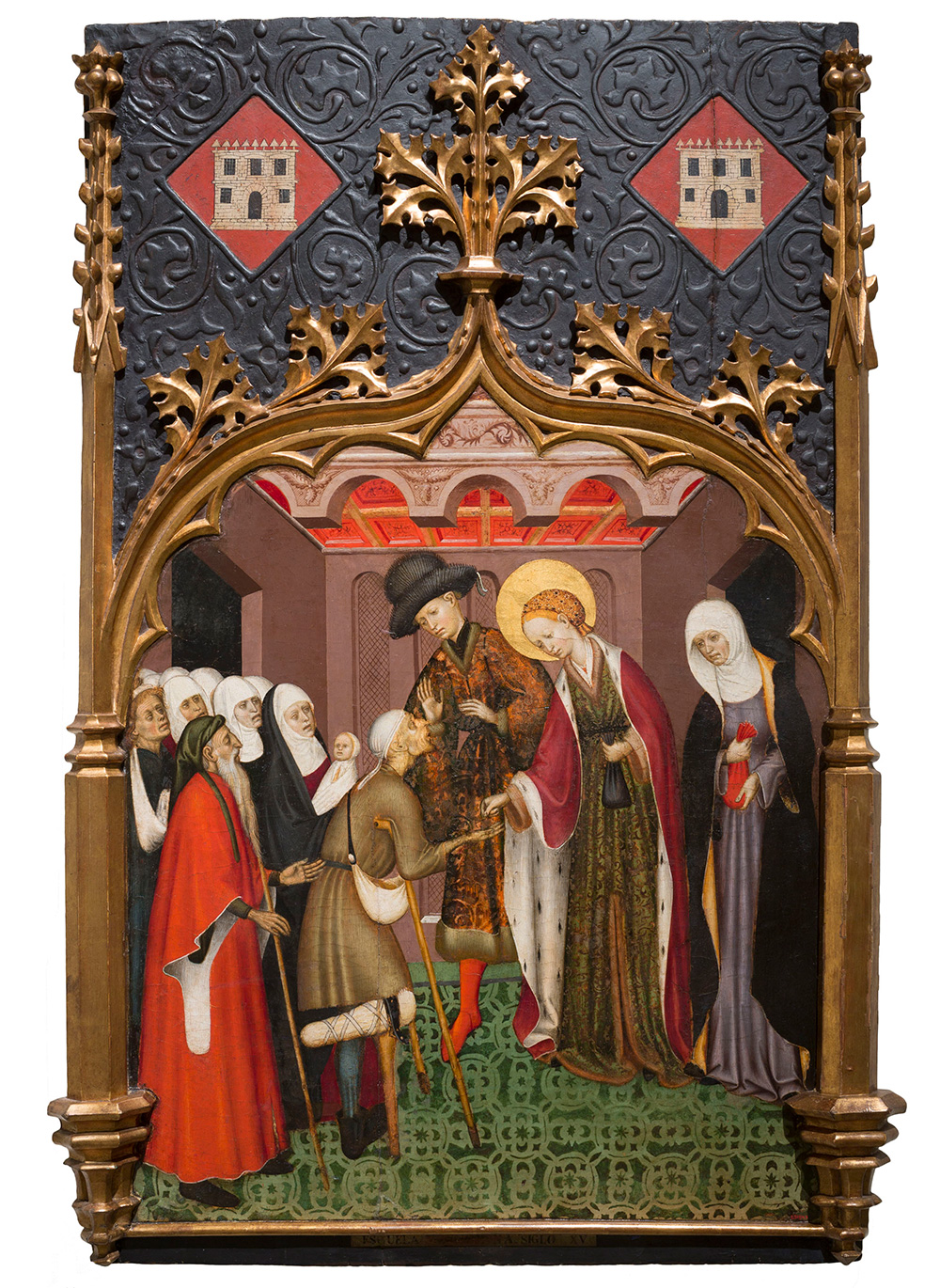
Bernat Martorell, Saint Lucy giving alms, circa 1435. National Museum of Art of Catalonia, Antonio Gallardo Ballart Collection, 2015, Public domain
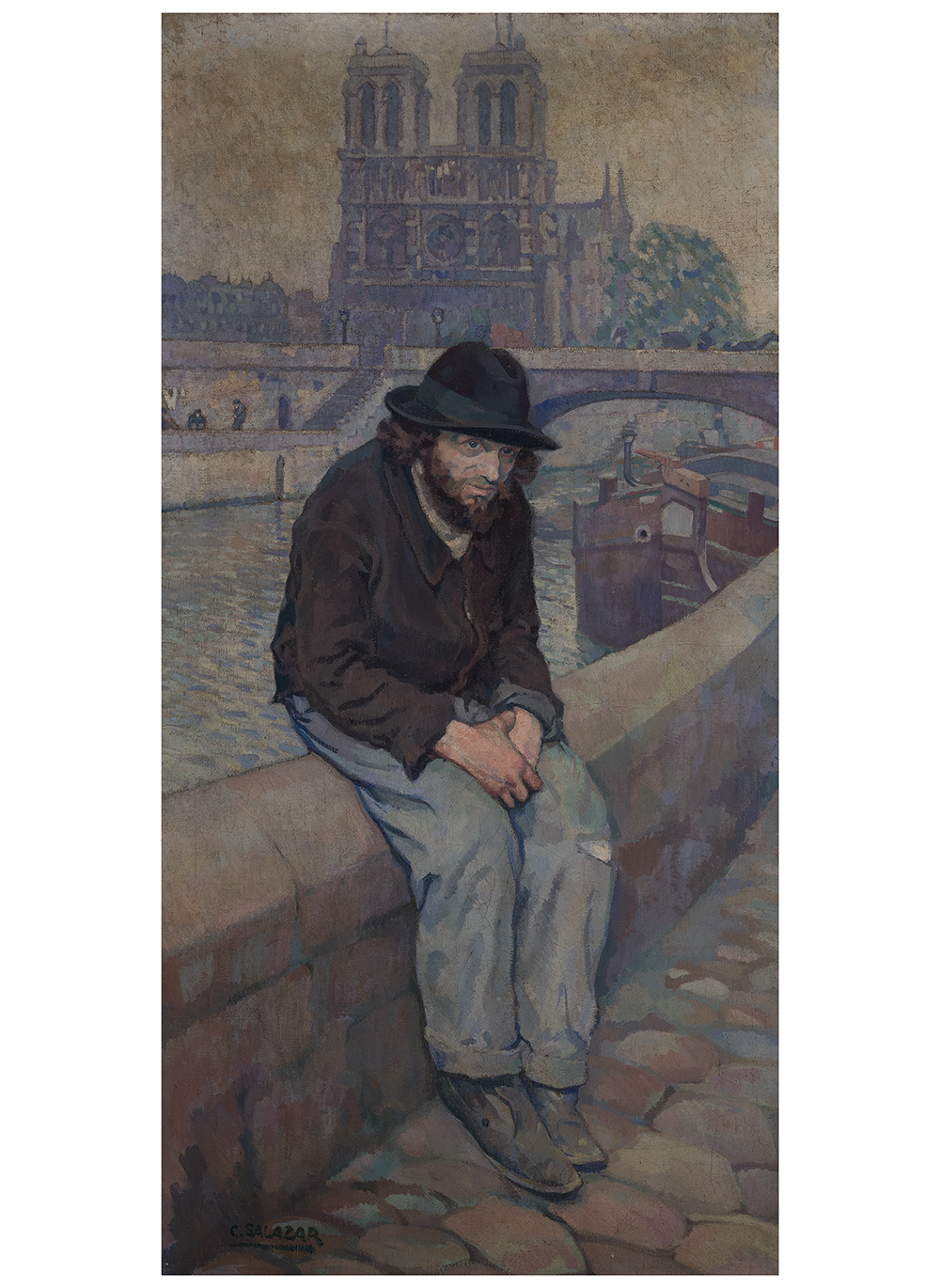
Clemente Salazar. Bohemio (Bohemian), 1926. Oil on canvas, 195 x 96 cm. MORERA Collection. Museum of Modern and Contemporary Art of Lleida, 0315
Donated by Clemente Salazar, 1926
Alexander Fisher, La Caritat (Charity), 1907, enamel on metal. MADB 1593 Museu del Disseny-DHub
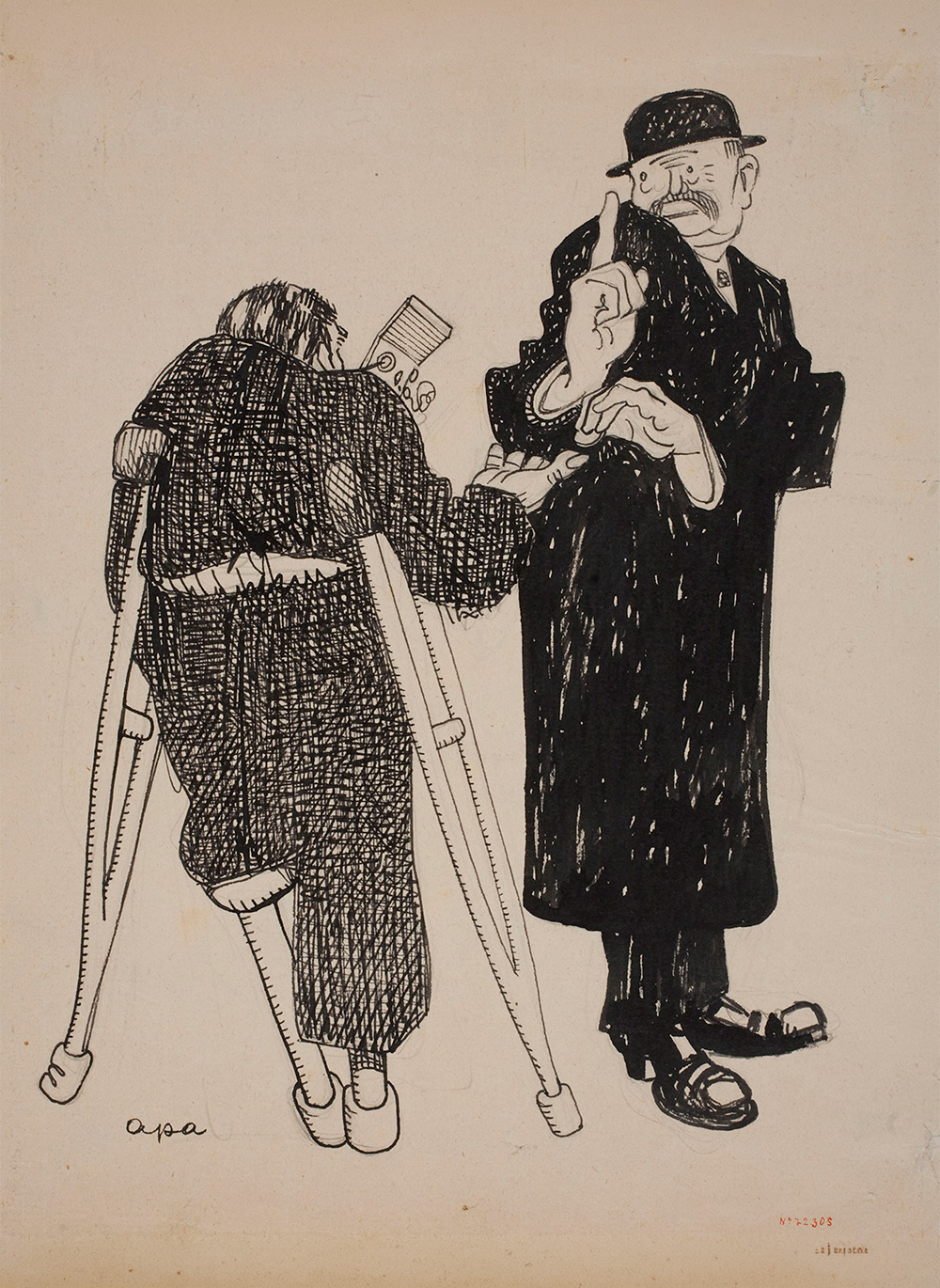
Feliu Elias, Christian charity, 1910. National Museum of Art of Catalonia, Acquired from the Agell Collection, 1963, © The author or their heirs
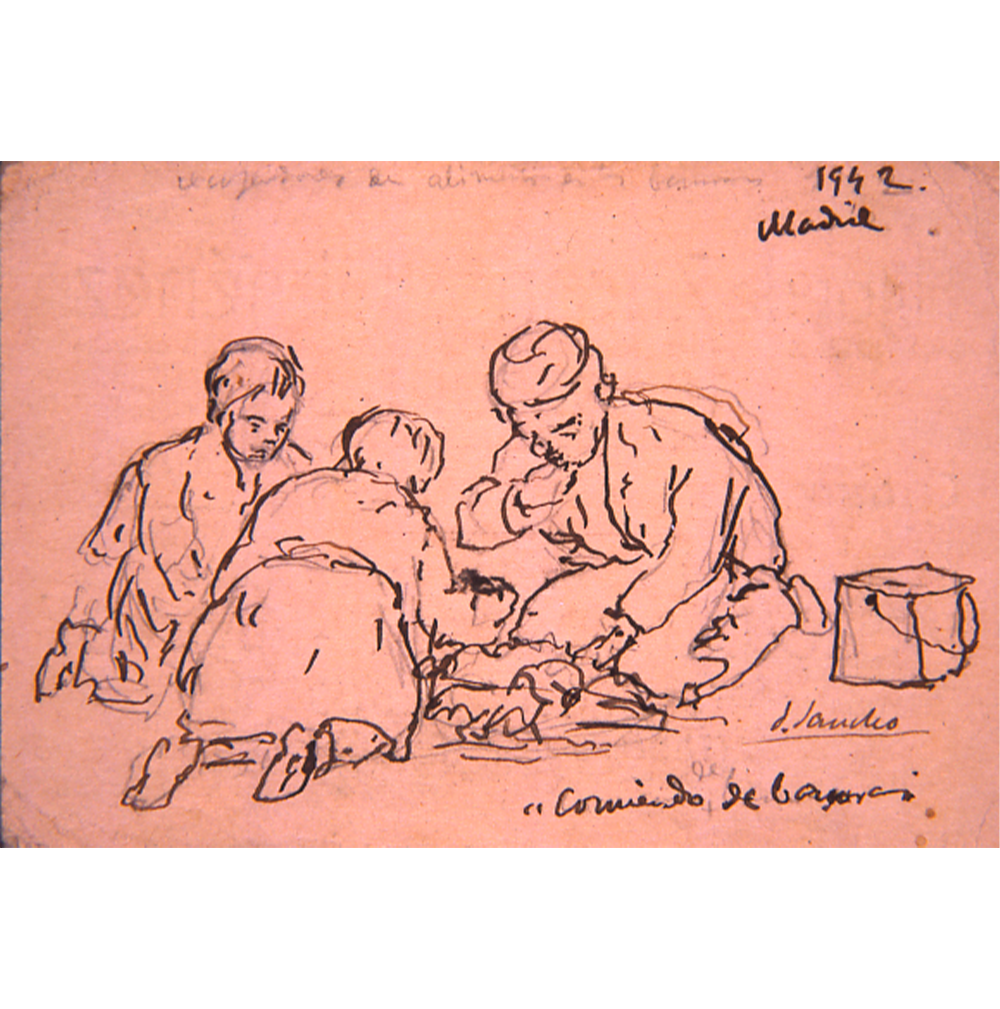
Josep Sancho Piqué. Comiendo de basuras (Eating Rubbish), 1942, ink and pencil drawing on white paper. MAMT NIG 903, Museu d’Art Modern de Tarragona
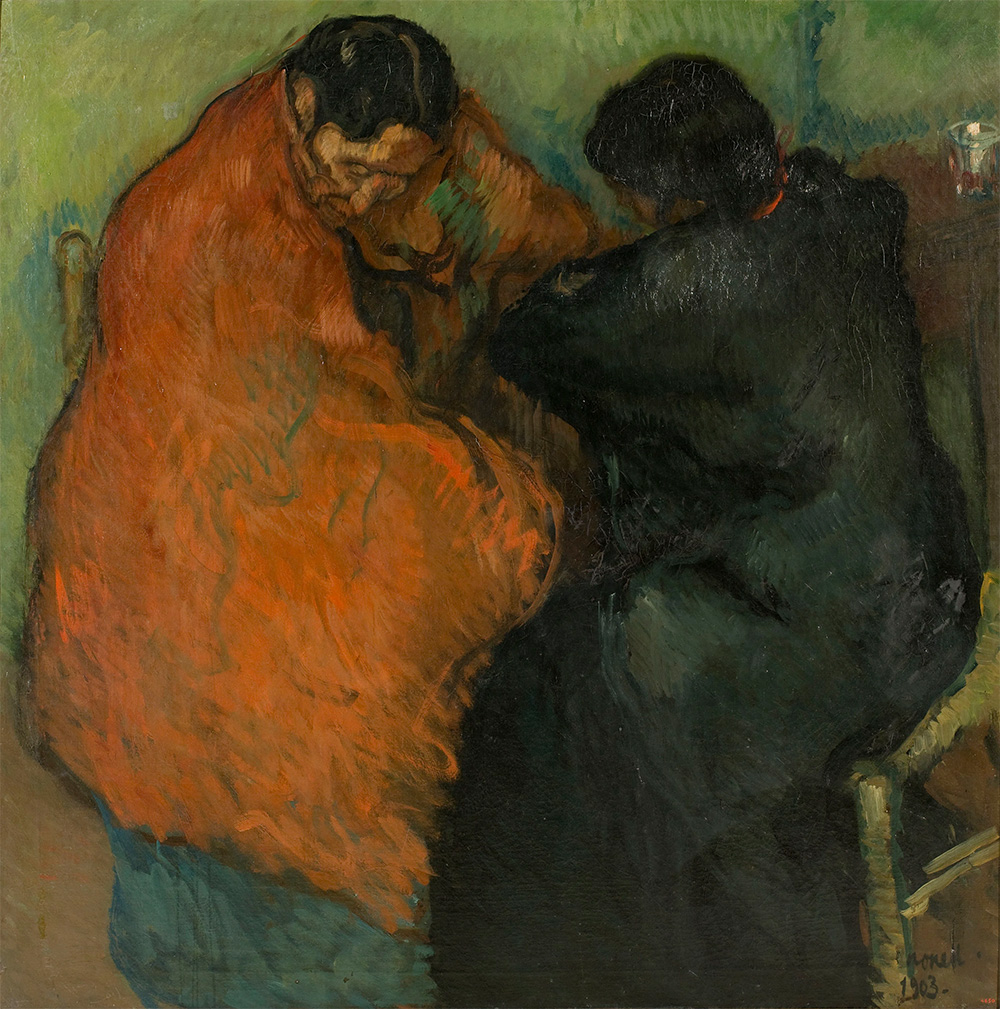
Isidre Nonell, Two gypsies, 1903. National Museum of Art of Catalonia, Acquired from the Plandiura collection, 1932, Public domain
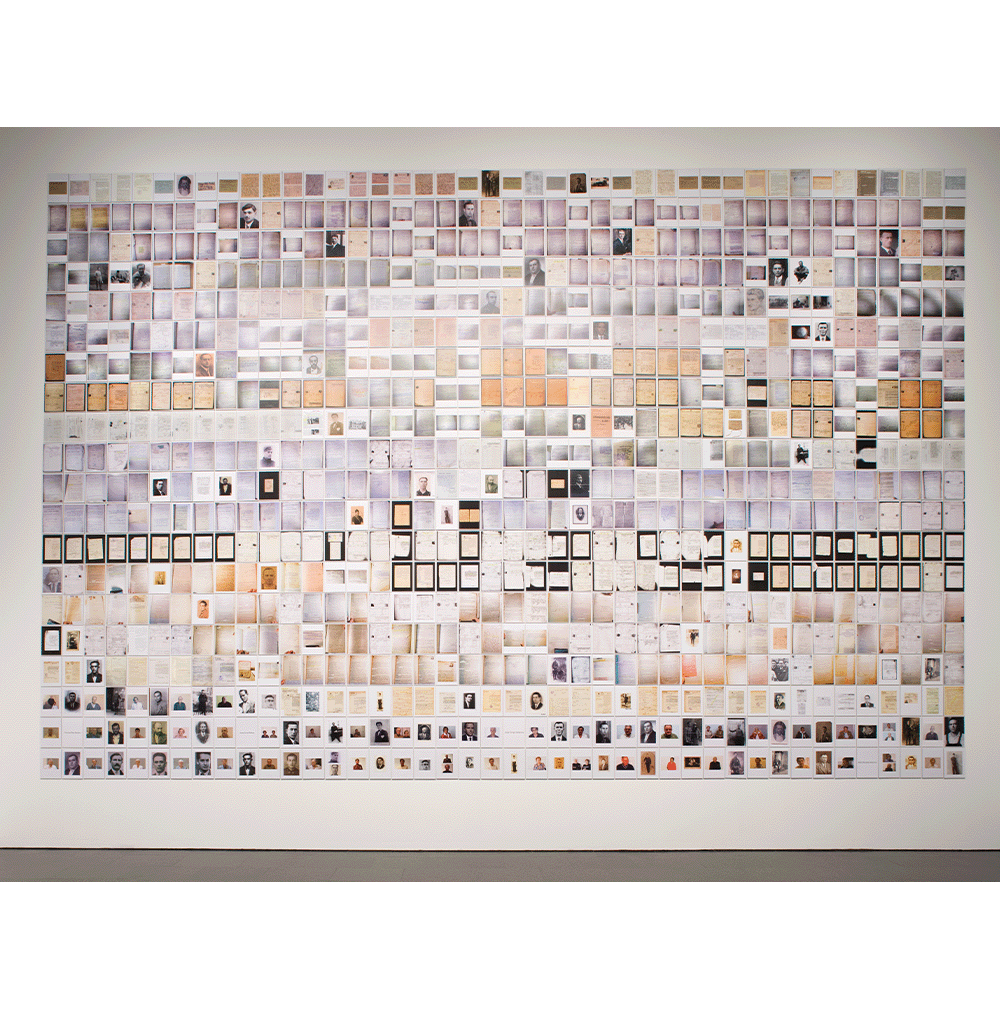
Abad, Francesc. The Boot Camp. 2004. Various materials. Different sizes MACBA Collection. MACBA Consortium. Donated by the artist © Francesc Abad, VEGAP, Barcelona © Photograph: Joan Roca de Viñals
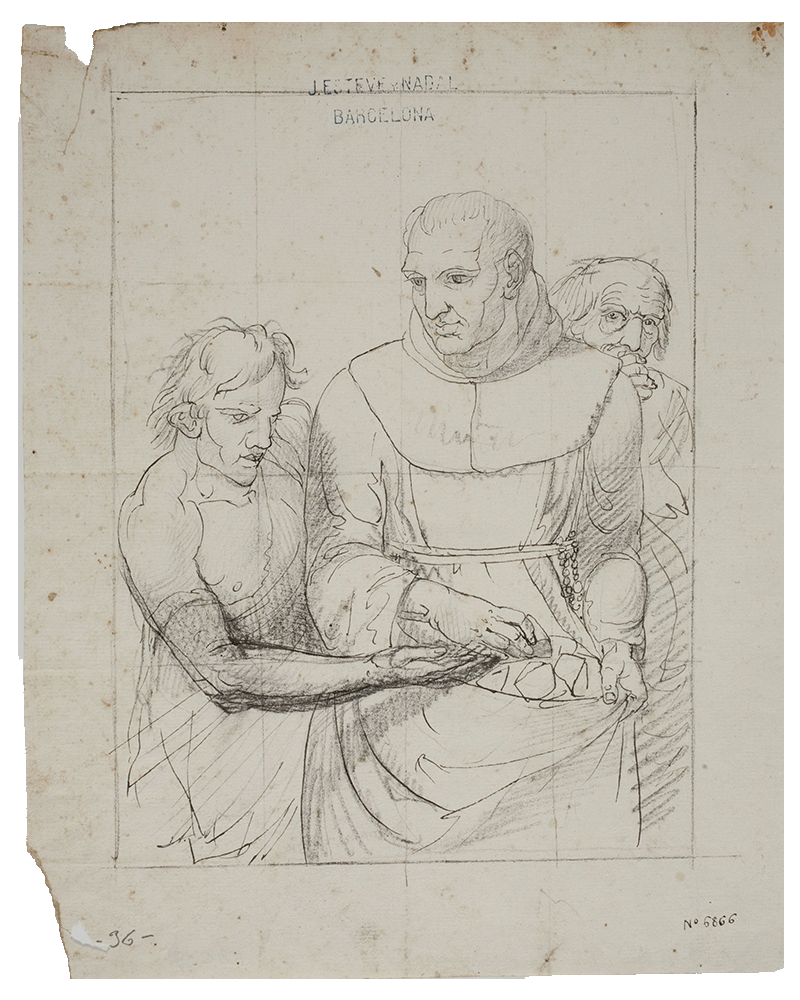
Josep Bernat Flaugier, A saint gives alms, circa 1800-1812. National Museum of Art of Catalonia, Bequeathed by Francesc Esteve Sans, 1907, 1907, Public domain
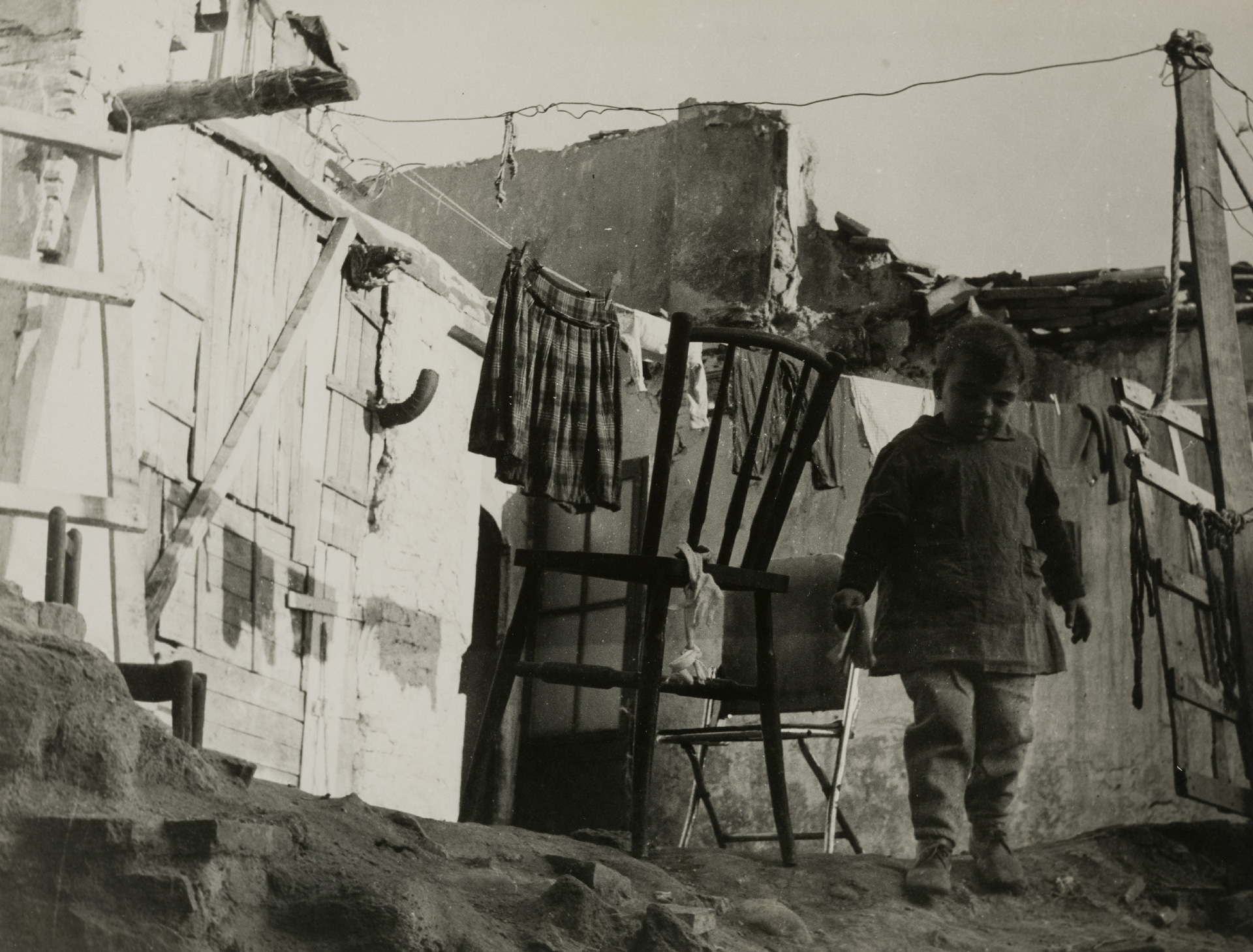
Ton Sirera. El Canyeret, Lleida, c. 1950. Black-and-white photograph, period reproduction, 30 x 40 cm. MORERA Collection. Museum of Modern and Contemporary Art of Lleida, 3490. Donated by Pere Sirera, 2013 ©Arxiu Ton Sirera, Lleida.
THE TOOLS OF POWER. THE POLICE
The visual representation of the police, of all the police in the world, of all that those in power call “the forces of order”, does not evoke the same reaction among those who view them. Everything depends on the ideological predisposition of the observer. Here we need to keep in mind the warning raised by the French philosopher Jacques Rancière: in order to see injustice in an image, that is, in a representation, the individual must previously be aware of that injustice in real life.
Those who do not see unjust repression in the works of Eulàlia Grau or Esther Remacha; those who are not made uncomfortable by a police raid depicted in the late 19th century; those who don’t grow numb by the mounted guards of Samarra, just to name a few, will all have a viewpoint where art takes precedence over life. The photograph by Paula Artés of a Spanish Guardia Civil police station places us in the ambivalence of the image: it may be co-opted by ideologies on the farthest right of the spectrum. No, images don’t speak for themselves.
Josep Lluís Pellicer, Police search, 1886. National Museum of Art of Catalonia, Acquisition of the Casellas collection, 1911, Public domain
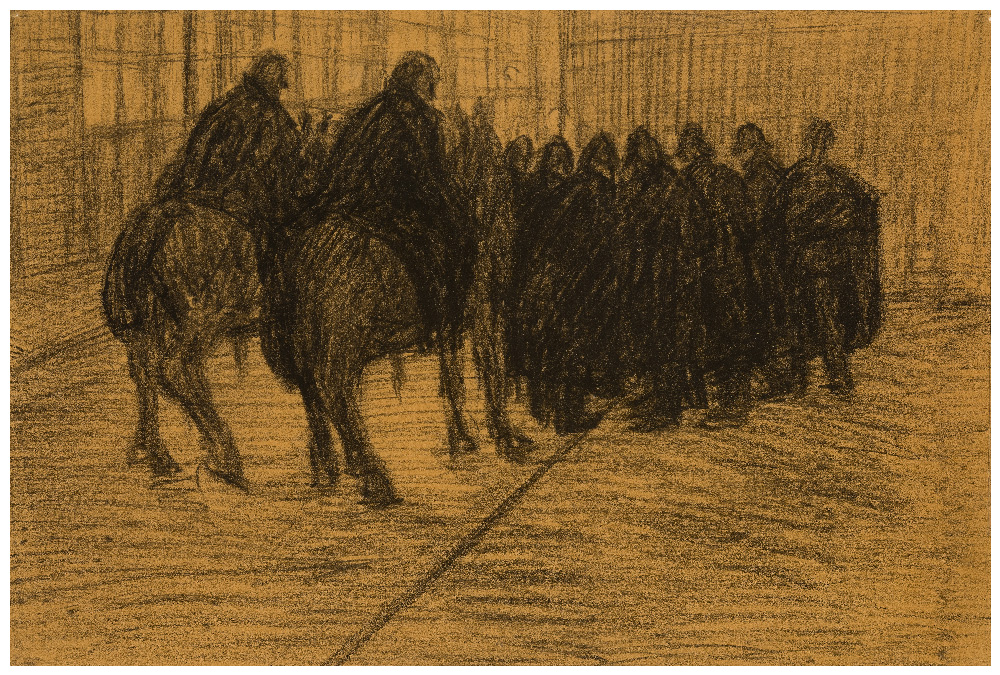
Antoni Samarra. Guards, circa 1913.
1913. Charcoal on paper, 21 x 31 cm. MORERA Collection. Museum of Modern and Contemporary Art of Lleida, 0347. Donated by Francisca and Maria Samarra, 1929
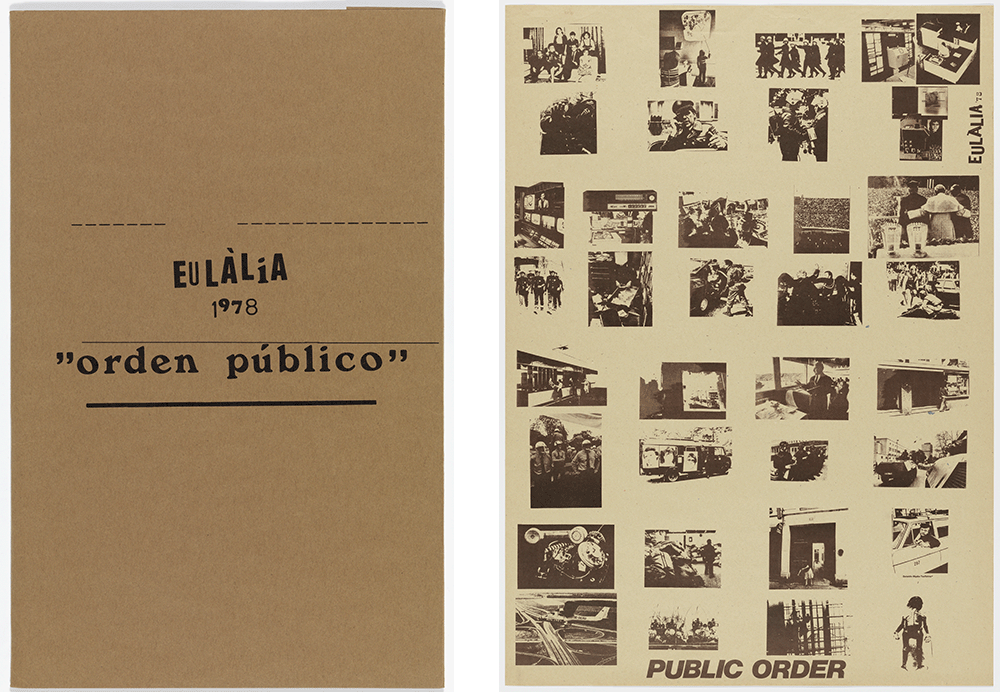
Grau, Eulàlia. Public Order, 1978. Offset printing on paper. 88.5 x 63.5 cm
MACBA Collection. MACBA Consortium. Artist’s collection. © Eulàlia Grau, VEGAP, Barcelona

Mannequin head with Civil Guard tricorn 4604. Museu Abelló. Mollet del Vallès
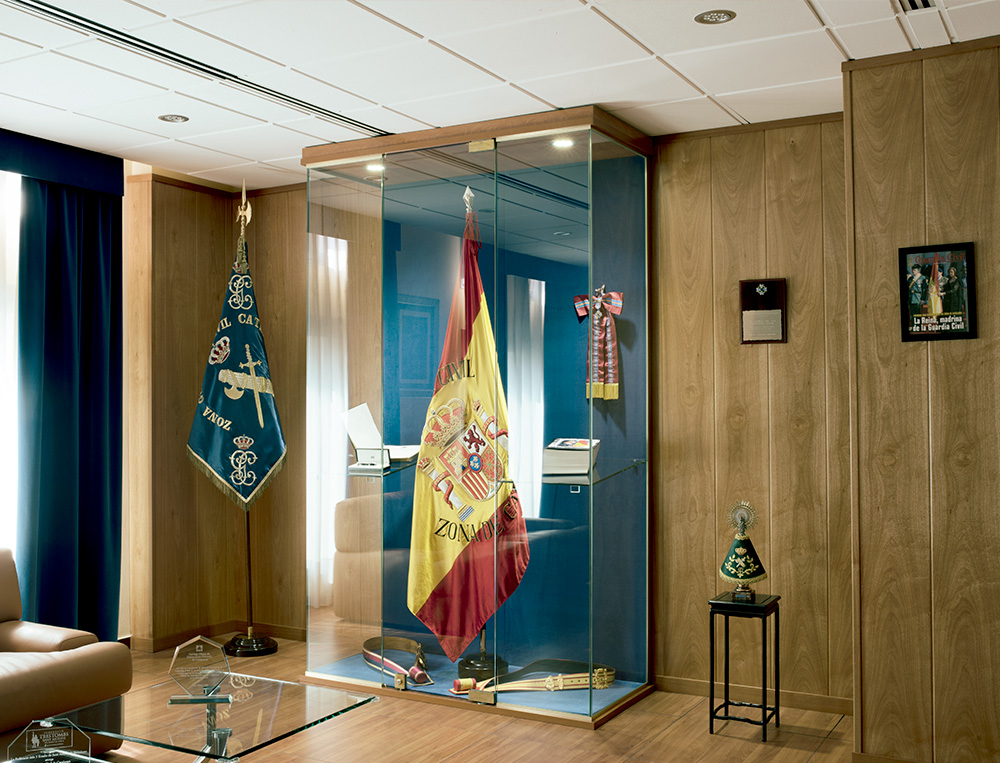
Paula Artés. Law Enforcement Agencies: 41º24’20.9’’N 2º09’52.5’’E, 2016. Colour photograph, 47 x 40 cm. MORERA Collection. Museum of Modern and Contemporary Art of Lleida, 4877
Generalitat de Catalunya Collection. National Collection of Photography, 2021
Esther Remacha. Fighters of the land 3, 1976-1977. Fotografia en blanc i negre, 30 x 40 cm. Col·lecció MORERA. Museu d’Art Modern i Contemporani de Lleida, 5022. Dipòsit de la Generalitat de Catalunya. Col·lecció Nacional de Fotografia, 2022
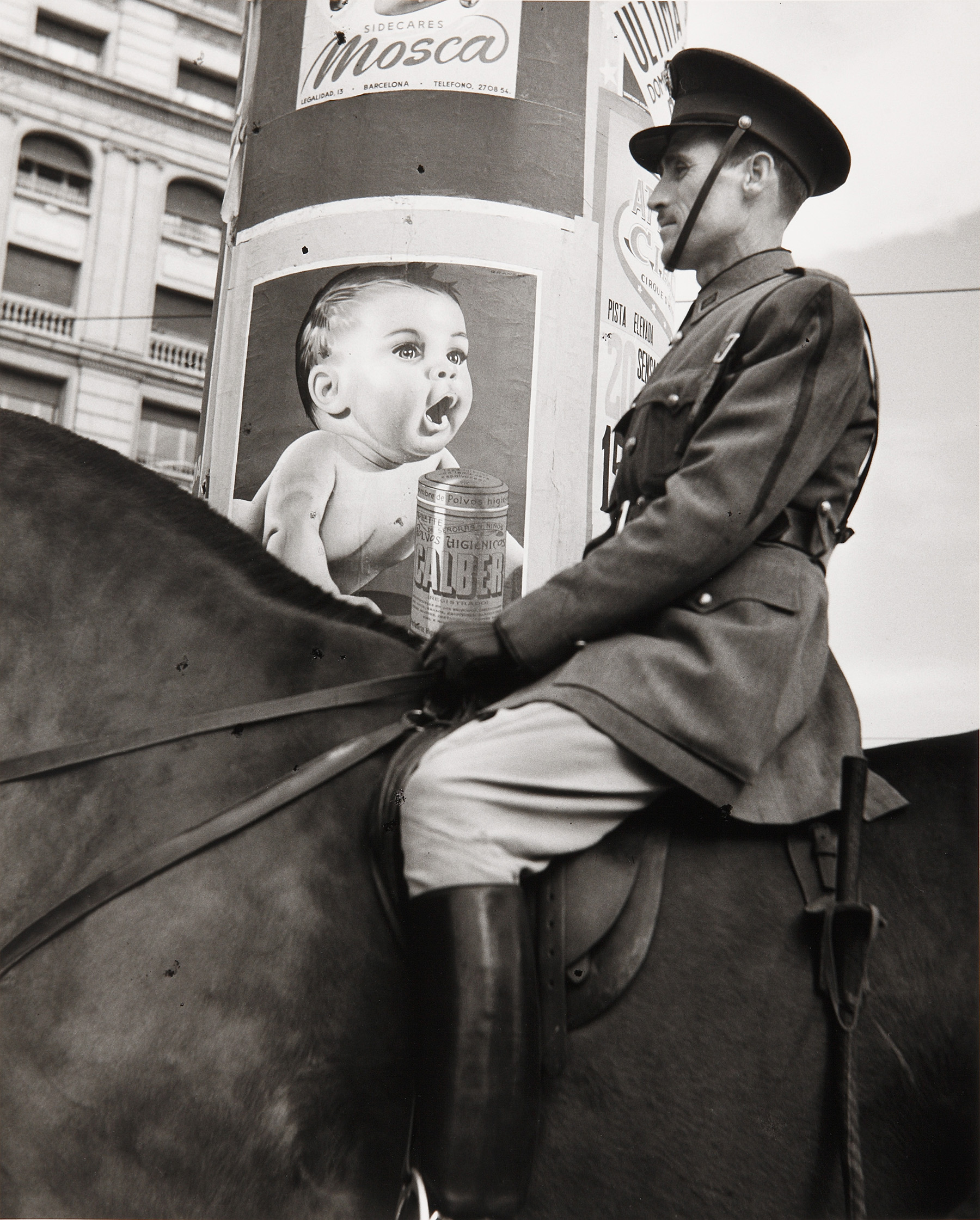
Francesc Català-Roca, “Publicitat Barcelona“, 1953. Museu de Valls
THE TOOLS OF POWER. PRISON
Prison is a coercive instrument that all powers have utilised. And still use today. It is a punitive device where an individual is deprived of their liberty.
In its visual representation, however, there are certain, often romantic, readings of the tragedy that imprisonment entails: we can recall Piranesi’s engravings (or the Prisoners Round by Van Gogh which reinterpreted a previous engraving by Gustave Doré). Marià Fortuny and Enric C. Ricart also gave a sugar-coated vision of the life of a prisoner. Art has often aestheticized repression, the punishment inflicted by power, as in the “executed” by Josep Sancho.
However, the existence of prisoners (especially, political prisoners) has been seen from apparently committed positions, as demonstrated by Camil Fàbregas’s homage to an unknown political prisoner, most likely crafted to take part in the international Unknown Political Prisoner contest held by the Tate in London, or the triptych The Hope of a Condemned Man by Joan Miró, which pays homage to the anarchist Salvador Puig Antich.
Giovanni Battista Piranesi, Prison, circa 1760. National Museum of Art of Catalonia, Contribution from the Barcelona Provincial Council, 1906, Public domain

Josep Planella, Inside a prison, circa 1840-1886. National Museum of Art of Catalonia, Bequeathed by Francesc Esteve Sans, 1907, 1907, Public domain
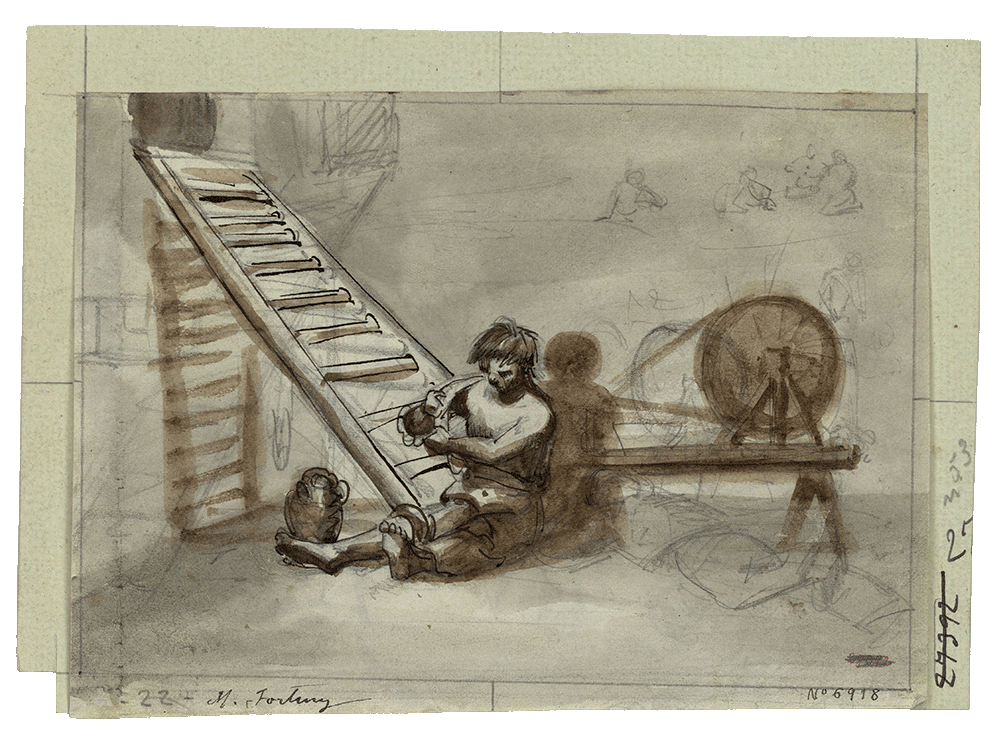
Marià Fortuny, Prisoner in prison / Scene Fragment and Other Sketches, circa 1856-1858. 1856-1858. National Museum of Art of Catalonia, Bequeathed by Francesc Esteve Sans, 1907, 1907, Public domain
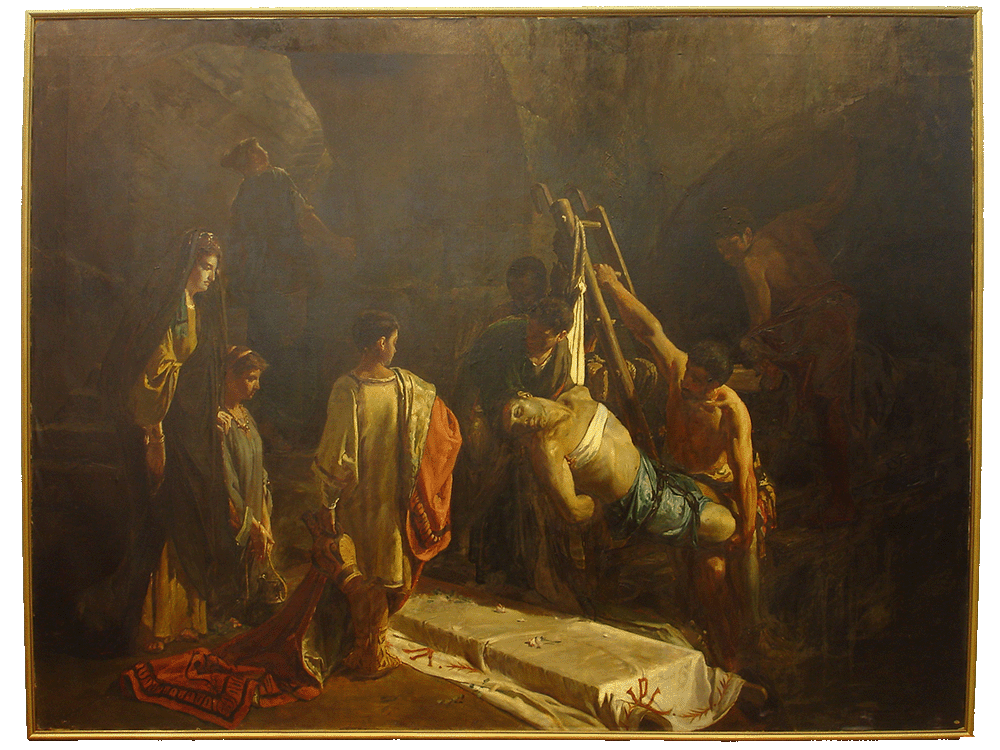
Josep Casanovas Clerch. Turment d’un presoner, last quarter of the 19th century Oil on canvas, 1.97 x 2.75 m. Inventory no. 948.
948. Museu d’Art de Sabadell

Josep Sancho Piqué. Mirando a los ajusticiados (Looking at the Executed), 1897, charcoal on paper. MAMT NIG 239, Museu d’Art Modern de Tarragona
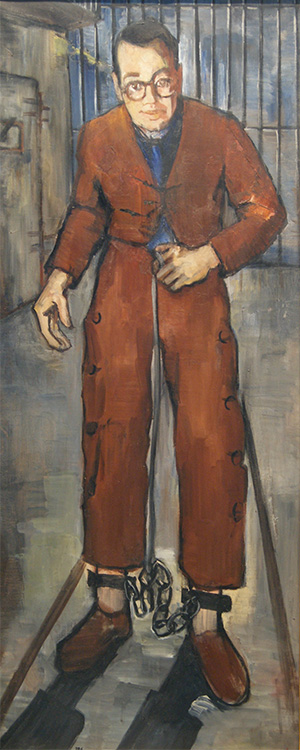
Claude Arvaud Moisson, Retrat del filósof francès R. Brasillach, (c. 1944), Museu de Valls.

Camil Fàbregas Dalmau. Project for a monument to the unknown political prisoner, 1945. Wood and stone, 51x30x30 cm/ pedestal 30×30 cm. Inventory no.: 1930.

Carlos Giménez. Spain, One, Great and Free (Prison Fodder, Original 1), 990. Chinese ink on card, 45.7 x 33 cm. MORERA Collection. Museum of Modern and Contemporary Art of Lleida, 5015.01. Generalitat de Catalunya Collection. National Collection of Cartoon and Illustration, 2022

C. Ricart. Life is a dream. Museu Víctor Balaguer
Joan Miró. L’esperança del condemnat a mort I (The Hope of a Condemned Man I), 9 February 1974, acrylic on canvas. © Fundació Joan Miró, Barcelona

Joan Miró. L’esperança del condemnat a mort II (The Hope of a Condemned Man II), 9 February 1974, acrylic on canvas. © Fundació Joan Miró, Barcelona

Joan Miró. L’esperança del condemnat a mort III (The Hope of a Condemned Man III), 9 February 1974, acrylic on canvas. © Fundació Joan Miró, Barcelona
Agustí Centelles. Untitled (Bombing of Lleida, cemetery trees), 1937. Black-and-white photograph, 23 x 34 cm. MORERA Collection. Museum of Modern and Contemporary Art of Lleida, 4332. MECD, CDMH, Centelles Archive, 2017
THE TOOLS OF POWER. WAR
The history of visual art (from painting to cinema, from photography to virtual games) has paid special attention to wars, both real and fictional. At the same time, improbably, art makes portraits and homages to those who lead us into these wars.
Wars are provoked and fed by institutionalised powers; the system feeds itself through combat, where the innocent always pay the price. Perhaps, now more than ever, it is here where the observer must choose a side, because the wars of the past are the wars of the present, and the victims are the same.
The images of Agustí Centelles, given that photography offers traces of reality, are accompanied by gazes made by drawings. The reading of contemporary art (Torres, Rabascall, Solsona, and more) brings us closer to a critical reading of war based on the symbolism of art. Or perhaps not?

Agustí Centelles. Untitled (Bombing of Lleida, relatives at the cemetery), 1937. Black-and-white photograph, 34 x 23 cm. MORERA Collection. Museum of Modern and Contemporary Art of Lleida, 4337. MECD, CDMH, Centelles Archive, 2017
Josep Sancho Piqué. Horrors d’una guerra: “La gresca de la revolució 1936” (Horrors of War: ‘The Turmoil of the 1936 Revolution’), ink drawing on white paper. MAMT NIG 894, Museu d’Art Modern de Tarragona
Ismael Smith, Allegory of the First World War, circa 1918-1919. National Museum of Art of Catalonia, Donated by the artist, 1955, © The author or his heirs
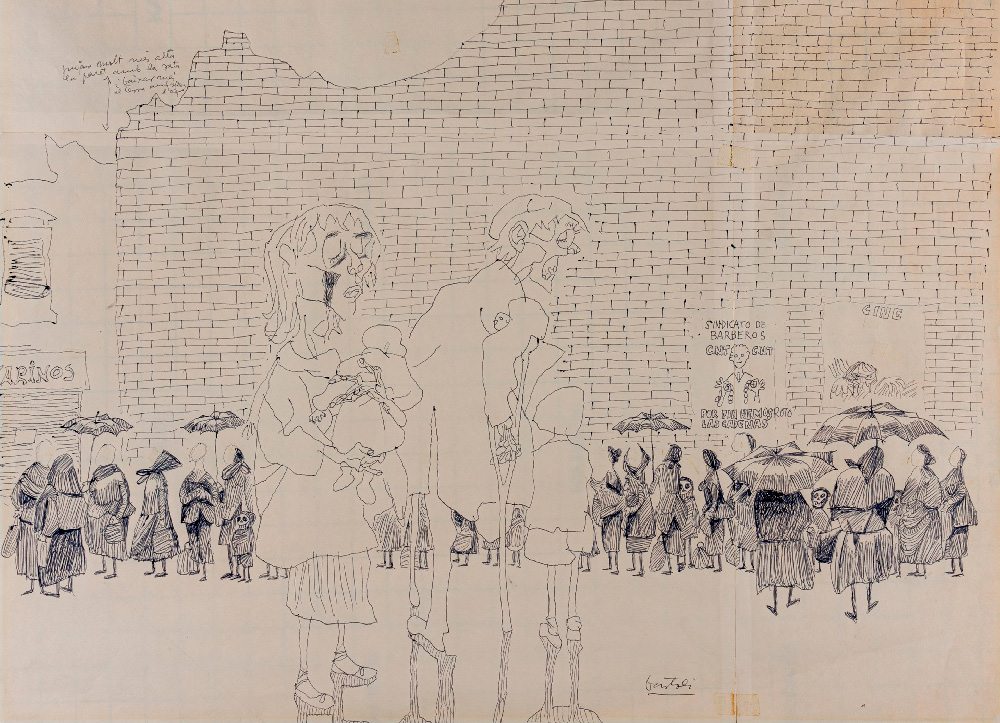
Josep Bartolí. Les cues de la guerra (Wartime Queues), c.1939, ink on paper. ME 1294
Museu de l’Empordà
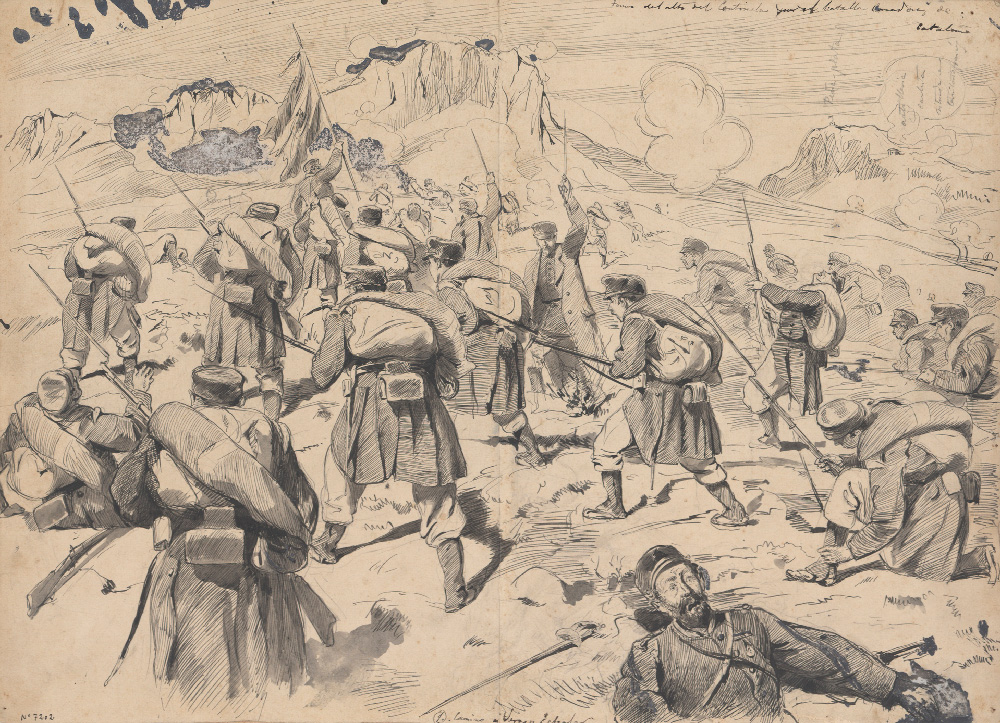
Josep Lluís Pellicer, Taking the Centinela Pass, 1876. National Museum of Art of Catalonia, Acquisition, 1908, Public domain
Rabascall, Joan. Atomic Kiss, 1968. Acrylic on canvas. 162 x 97 cm
MACBA Collection. Barcelona City Council Collection. © Joan Rabascall, VEGAP, Barcelona
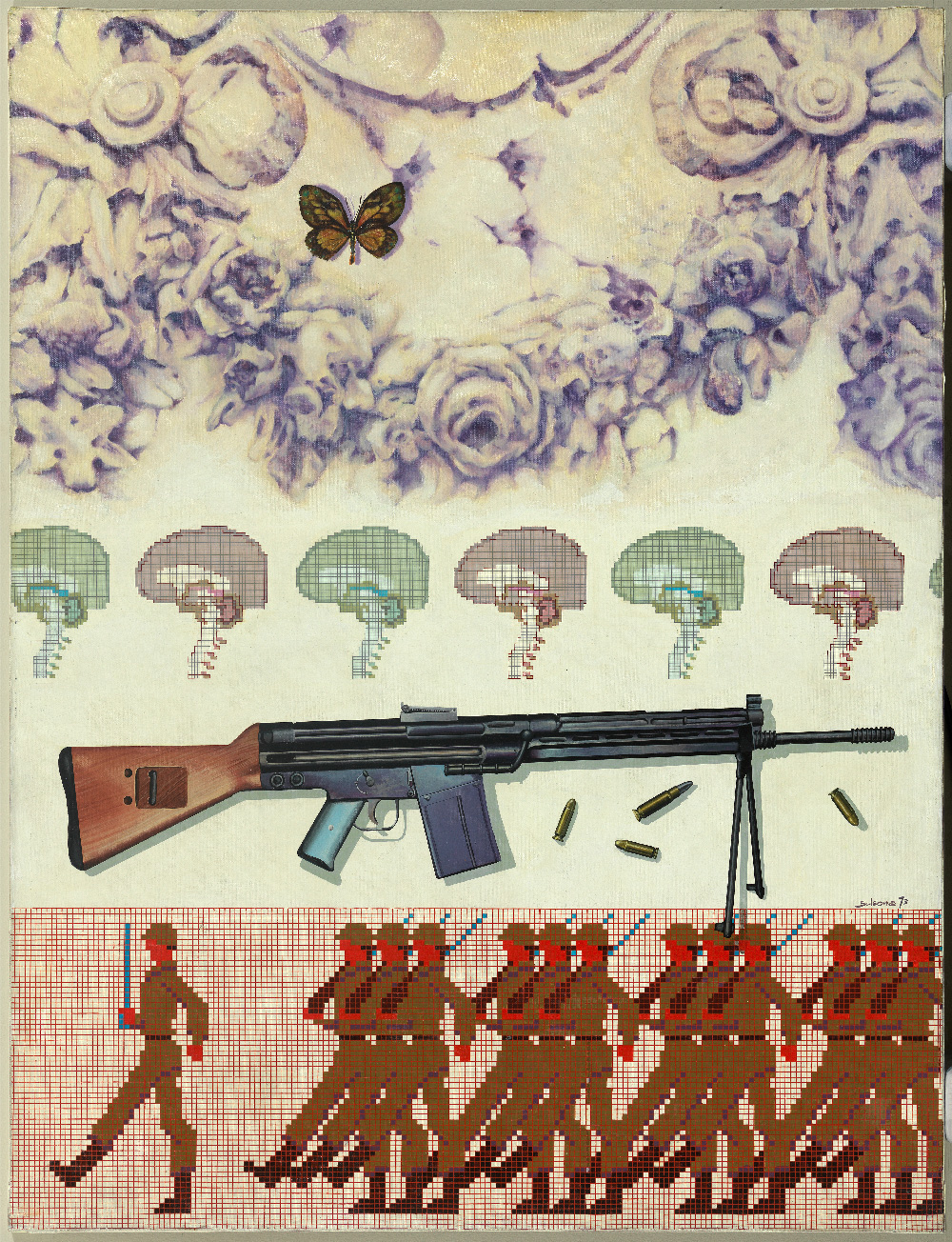
Solsona, Alberto. The Art of War, 1973, Acrylic on canvas, 116 x 89 x 1.5 cm. MACBA Collection. MACBA Consortium. Donated by the Almela-Solsona Foundation
© Fundación Almela-Solsona
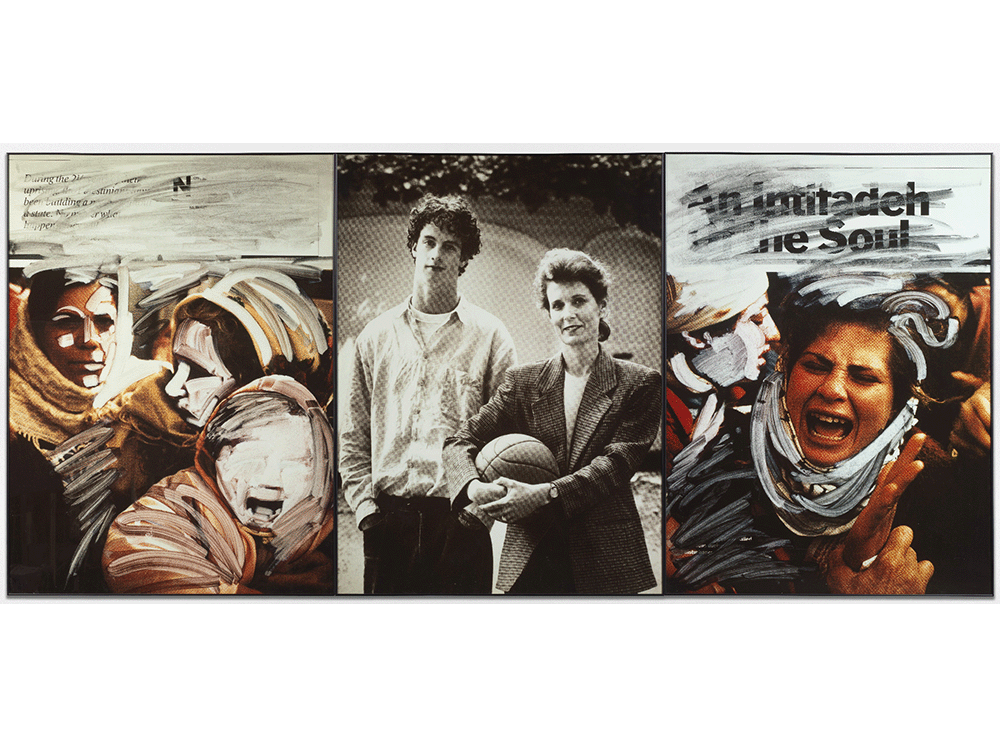
Torres, Francesc, Newsweek Series #14. 1991, Photography using bleached polyester
Leaflet 170 x 375 cm. MACBA Collection. Barcelona City Council Collection. Donated by Rafael Tous. © Francesc Torres, VEGAP, Barcelona
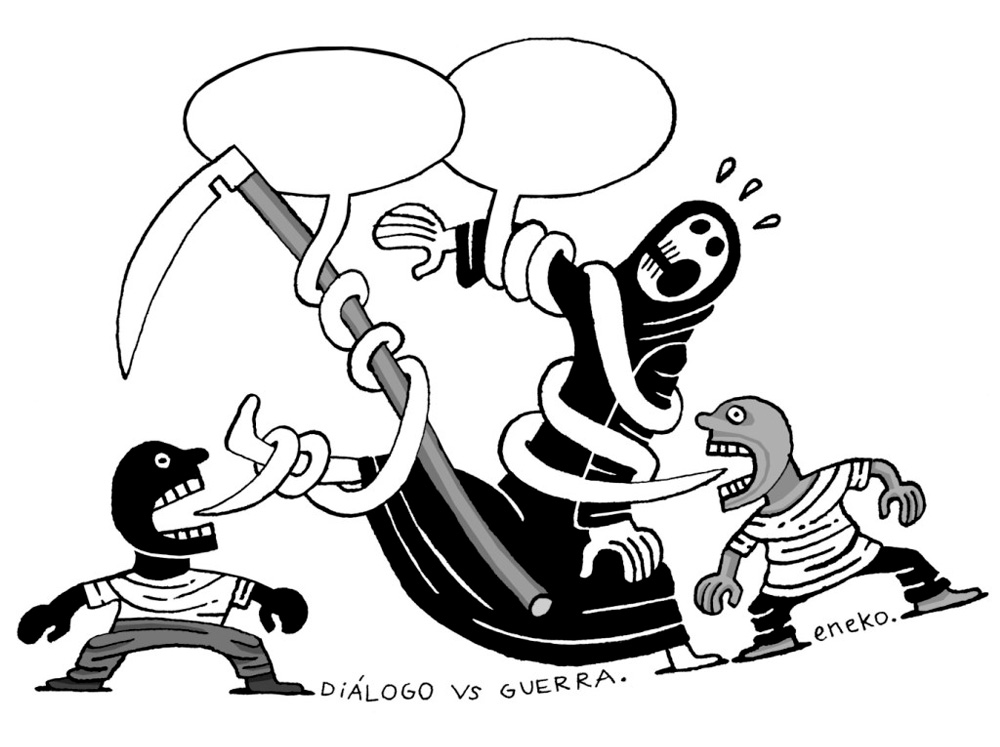
Eneko Las Heras. Diálogo vs guerra (Dialogue vs War), 2007. Digital print. ME 2883 Museu de l’Empordà
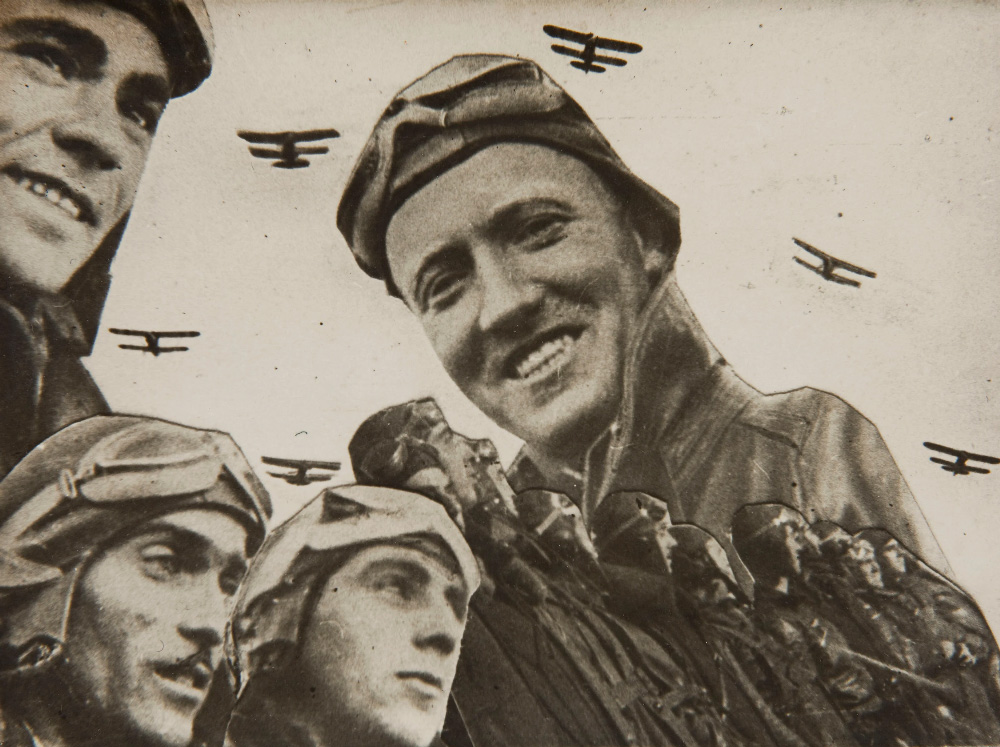
Josep Badosa, The glorious Republican Air Force, so brilliantly active on all fronts, 1936. National Museum of Art of Catalonia, Acquisition, 2011, Public domain
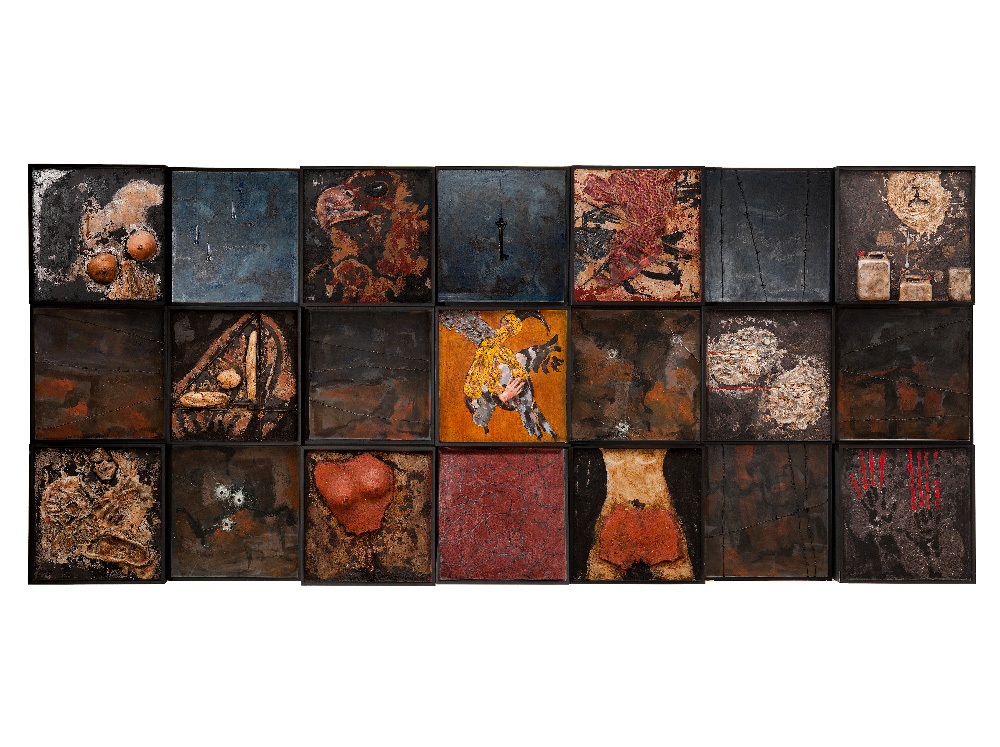
Jaume Solé, Retaule Homenatge a Sarajevo (Tribute to Sarajevo Altarpiece), 1993, mixed media and collage on a wooden frame. MAMT NIG 4047, Museu d’Art Modern de Tarragona
THE TOOLS OF POWER. ART
Marxist theory has already made it clear that religion, philosophy and art were the ideological superstructures that supported class society, i.e. the dominion of some over others. Put another way: the economic structure generates inequality.
Power has always utilised art to justify its own power: those supposedly majestic depictions (equestrian portraits are the utmost expression of the powerful’s self-complacency and how they use servile artists), religious scenes that seek to spread fear among parishioners, the supposed glamour of everything that has to do with art and so on.
This paradigm started to come under questioning in the 19th century. However, the capitalist system has devoured it all. In their halls, museums house both the art created to exalt the glory of the powerful, as well as works that have been created to oppose them.
Miquel Viladrich. The Count-Duke of Olivares, 1908. Oil on canvas, 154 x 156 cm.
MORERA Collection. Museum of Modern and Contemporary Art of Lleida, 0326
Origin unknown

Mestre de Taüll, Apse of Sant Climent de Taüll, c. 1123. National Museum of Art of Catalonia, Acquired from the Board of Museums in the 1919–1923 campaign, Public domain
Joan Ferrer Miró, Public exhibition of a painting. circa 1888. National Museum of Art of Catalonia, Contribution from the Barcelona Provincial Council, 1906, Public domain

Josep Lluís Pellicer, 1787 Art Exhibition, Second half of the 19th century. National Museum of Art of Catalonia, Acquired from the “Exposició Pellicer” in Barcelona, 1902, Public domain
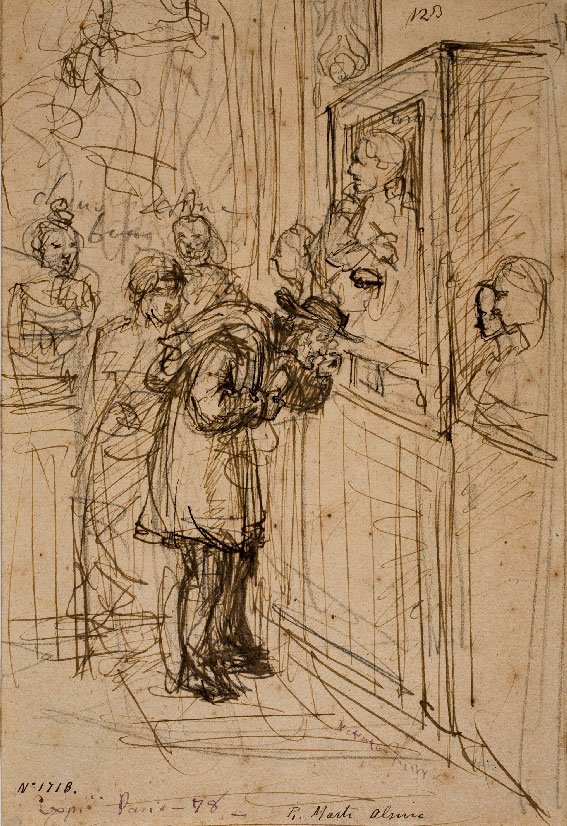
Ramon Martí i Alsina, An exhibition hall, 1878. National Museum of Art of Catalonia, Acquisition of the Casellas collection, 1911, Public domain

José González Bande. El camí de la glòria artística (The Path to Artistic Glory), 1885, oil on canvas. ME 638 / Loaned from the Museo Nacional del Prado. Museu de l’Empordà
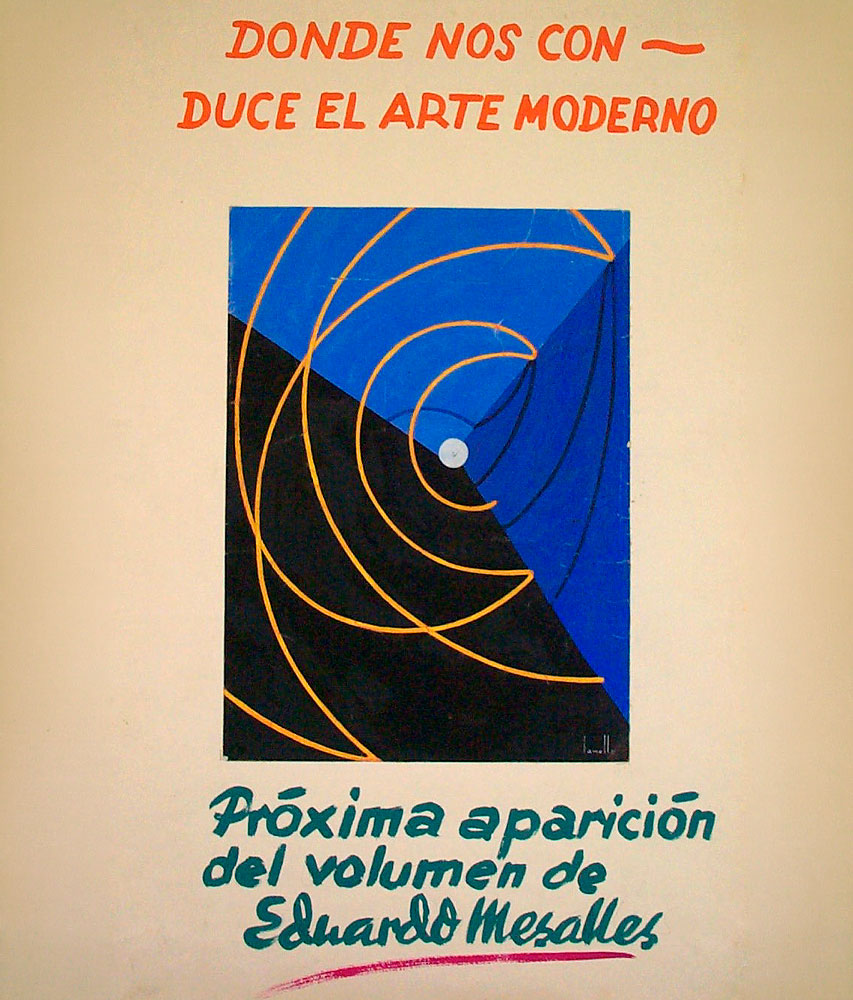
Antoni Garcia Lamolla. Poster, c. 1936. Tempera on paper, 59 x 37.5 cm. MORERA Collection. Museum of Modern and Contemporary Art of Lleida, 1513. Donated by Francisco Cristòfol, 1999
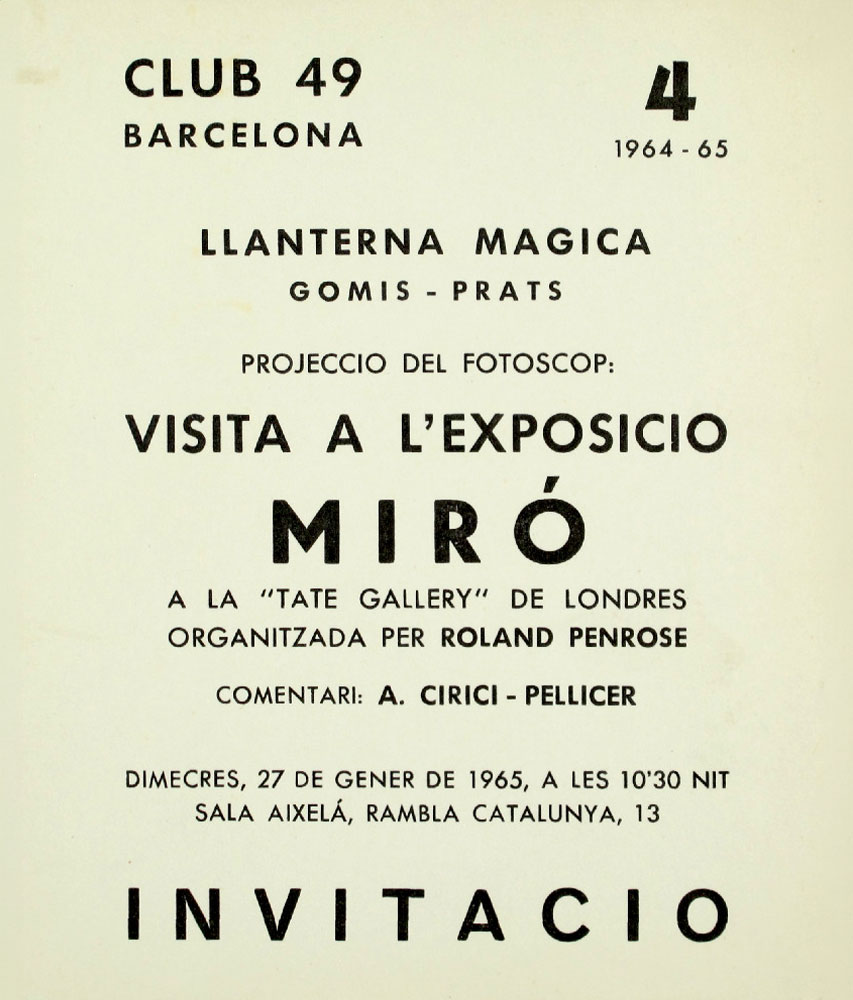
Club
49 (Group of artists), Borràs, Maria Lluïsa, Gomis-Prats’ Magic Lantern: a Photoscop projection: a visit to the Miró exhibition at the Tate Gallery in London, organised by Roland Penrose, 1965, 15.8 x 12.7 cm, MACBA Collection. Research and Documentation Centre Maria Lluïsa Borràs Archive
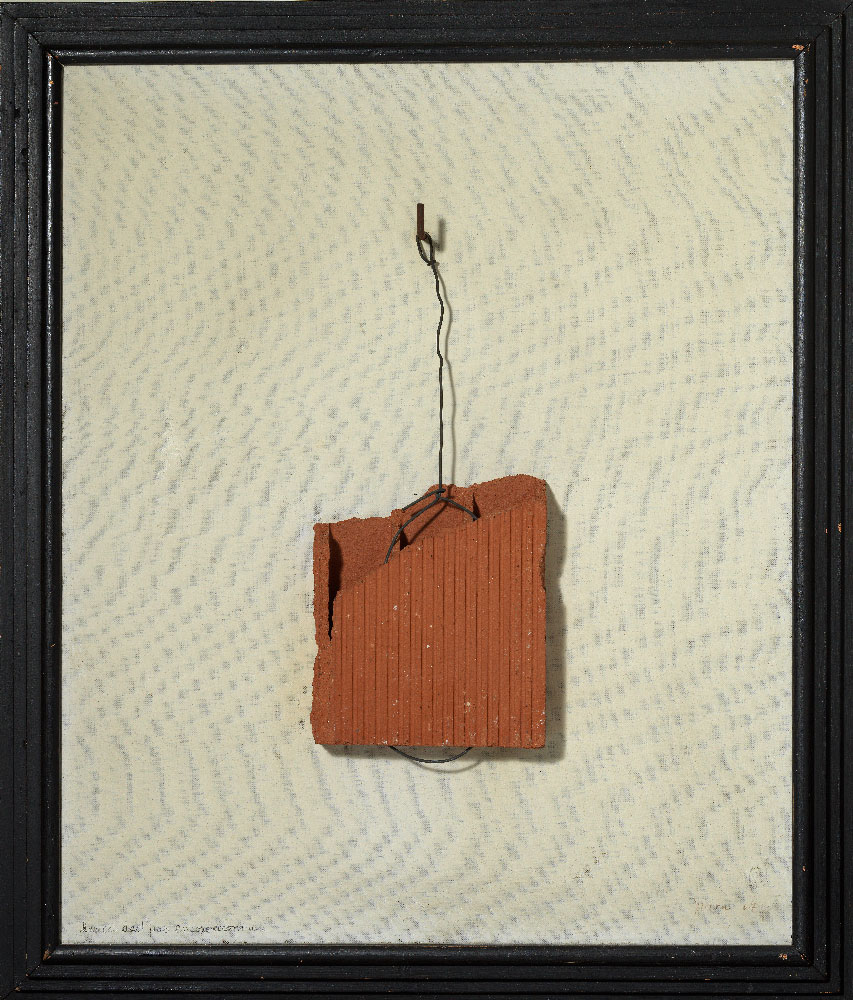
Xifra, Jaume. Artwork not yet recognised, 1967, Brick and iron mounted on a canvas and wood frame, 74 x 63 x 7 cm. MACBA Collection. Barcelona City Council Collection. © Jaume Xifra, VEGAP, Barcelona
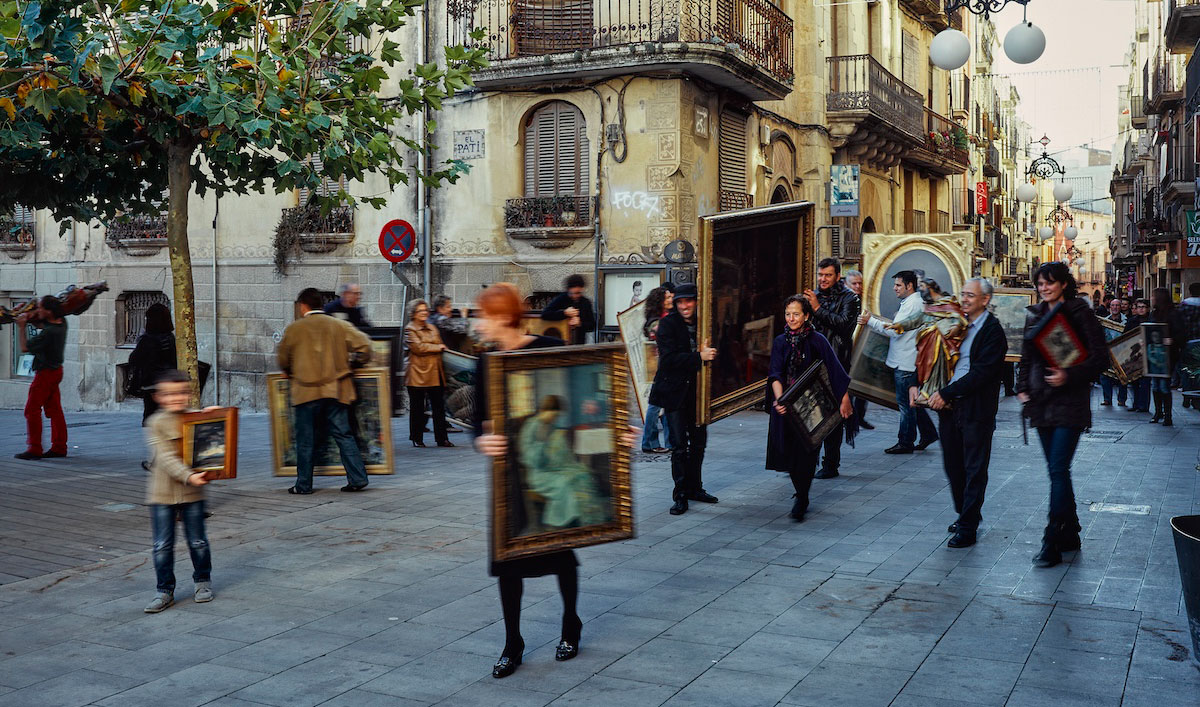
Perejaume, Migdia a Valls, 2009. Museu de Valls.
OPPOSITION TO POWER
Those who have held power throughout history have not given licence to show opposition to their reign: if dissident visual culture does exist it is because, at a specific moment, a critical gaze was permissible. Or perhaps it had lived in clandestine spaces and was later co-opted by institutions, including museums.
Art is ideology. Or put another way, museums are not neutral. Once again, everything ends up depending on the observer’s gaze, which is necessarily suspicious, attentive to all kinds of manipulations that are carried out by means of representations.
Catalan art museums are full of works that need to be interpreted to know which side of democracy they are on. Shall we give it a go?
Antoni Estruch. A workers’ demonstration / Manifestation for the Republic, 1904. Oil s. cloth, 141’5 x 201’5 cm. Núm. d’inv.: 1104. Museu d’Art de Sabadell
Cardona Torrendell. Protest, 1968. Biblioteca-Museu Víctor Balaguer
The Day of the Catalan National Flag, 1977, Joan Abelló i Prat, 1922-2008, oil on canvas
Reg. D-0003, The Abelló family. Abelló Museum Mollet del Vallès
Reg. D-0003, The Abelló family. Abelló Museum Mollet del Vallès
Manuel Edo Mosquera, Miners, circa 1937. National Museum of Art of Catalonia, from the “Quarterly Fine Arts Exhibition”, Barcelona, 1938, © The author or their heirs
Rabascall, Joan. Culture (from the “Spain is different” series) 1975 Photographic emulsion on canvas 102 x 102 x 3 cm MACBA Collection. MACBA Foundation © Joan Rabascall, VEGAP, Barcelona
Miquel García Membrado. 53 Revolutions. Museu d’Art Modern de Tarragona

Núria Güell. Stateless by choice, 2015-2016. Colour photograph, 148.7 x 42 cm. MORERA Collection. Museum of Modern and Contemporary Art of Lleida, 4324. Generalitat de Catalunya Collection. National Collection of Contemporary Art, 2018

Primitivo Martín. Mao Trilogy, 1979. Photo montage, 9 x 15 cm. MORERA Collection. Museum of Modern and Contemporary Art of Lleida, 4413. Donated by Lucía Martín Carrero, 2019

Toni Prim. First referendum. Black-and-white photograph. Modern copy of the original negative, 18 x 28 cm.
MORERA Collection. Museum of Modern and Contemporary Art of Lleida, 4840
Generalitat de Catalunya Collection. National Collection of Photography, 2020

Alfons López. Nuclear power stations, El Papus , 1979. Chinese ink on paper, 16.3 x 26 cm. MORERA Collection. Museum of Modern and Contemporary Art of Lleida, 4012. Donated by Alfons López, 2016
J. Pons, Lina Ódena, 1937. National Museum of Art of Catalonia, From the “International Exhibition”, Paris, 1937, © The author or their heirs

Daniel Argimon. Cartel para la revolución (Poster for the Revolution), 1971, oil on canvas. ME1440 Museu de l’Empordà

Alfons López. I’m in a permanent “camp” in some places, 1971. Collage and ink on card, 25.7 x 20.5 cm. MORERA Collection. Museum of Modern and Contemporary Art of Lleida, 4983
Donated by Alfons López, 2022

Francesc Vidal, sense títol [Contra l’abocador de Forès], c. 1990, Museu de Valls.